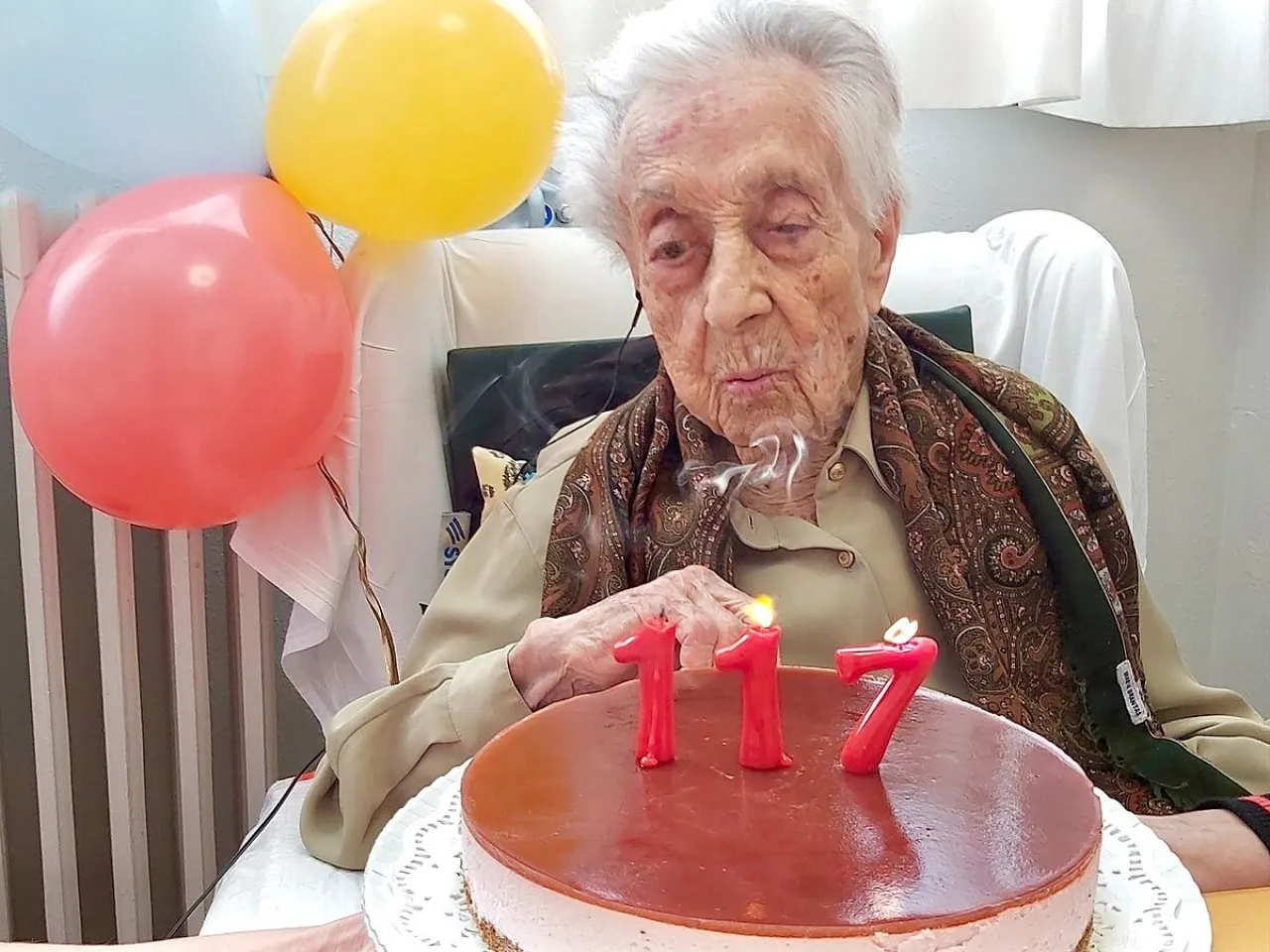
Khaberni - A new scientific study published in "Cell Reports Medicine" revealed an analysis of the genome of Maria Branyas Morera, the American-born and Spanish woman who died in August 2024 at the age of 117 years and 168 days, after becoming the world's oldest person.
Genes and Lifestyle
The study, led by Dr. Manel Esteller from the Josep Carreras Leukemia Research Institute in Barcelona, revealed that the secret to Branyas's longevity lies in a combination of exceptional genes and a healthy lifestyle.
According to the study, researchers took samples of Branyas's blood, saliva, urine, and feces before her death, comparing her genome with those of 75 other Iberian women, and concluded that half of her lifespan can be attributed to her unique genes, which protected her from age-related diseases such as heart disease and cognitive decline, while her healthy lifestyle contributed to the other half.
Esteller told international media: "She was a lucky lady from the start, and gained an additional advantage through her lifestyle."
The Role of Yogurt
According to the study, Branyas, who was born in San Francisco in 1907 and settled in Catalonia, Spain since 1915, lived in a care home for 22 years, never smoked or drank alcohol, followed a Mediterranean diet rich in olive oil, with three daily servings of yogurt, walked for an hour daily, and continued to work until it became impossible. Researchers assumed that her regular yogurt consumption contributed to maintaining her gut microbiome similar to that of a younger person, reducing inflammation in her body.
Professor Claire Steves from King's College London, who did not participate in the study, explained that Branyas's love for yogurt might not be the sole reason for her overall health, but her microbiome reflects that "she was an excellent host to these microbes thanks to other positive factors in her body."
Steves praised the level of detail in the study, describing it as "exceptional," noting that it is the first to analyze the mechanisms of aging in such depth in a supercentenarian case.
Protective Genes and Future Prospects
The researchers identified specific genes in Branyas, including one that enhances immune function and cognitive retention, another that improves fat metabolism, and a third linked to brain health and heart disease.
The study showed that "extremely advanced age and poor health are not inherently linked," suggesting that disease in old age is not inevitable and can be altered through biological interventions.
Steves cautioned against generalizing the results of a single individual's study, noting that the aging process varies from person to person, but confirmed that Branyas's analysis offers valuable insights.
Esteller added that identifying genes and proteins associated with healthy aging could guide the development of drugs targeting these elements, and Steves said: "Our goal is not necessarily to live to 117 years, but to minimize the period of illness and suffering as much as possible, which is what Branyas appears to have achieved."
Study Recommendations
The study calls for further research to replicate the results in other supercentenarians, focusing on combining genes and lifestyle patterns to promote healthy aging.
Branyas's story, known for saying "I am old, very old, but I am not stupid" in her biography on X, shows that a combination of genetic luck and a healthy lifestyle can significantly extend life expectancy.