Khaberni - The Ethiopian government announced its rejection of the accusations made by Cairo, which linked the recent Sudan floods to the operations of the Renaissance Dam.
The Ethiopian Ministry of Water and Energy stated in a formal declaration that it refuses for Addis Ababa to be blamed for natural disasters whose causes are due to climate and structural factors within Sudan itself.
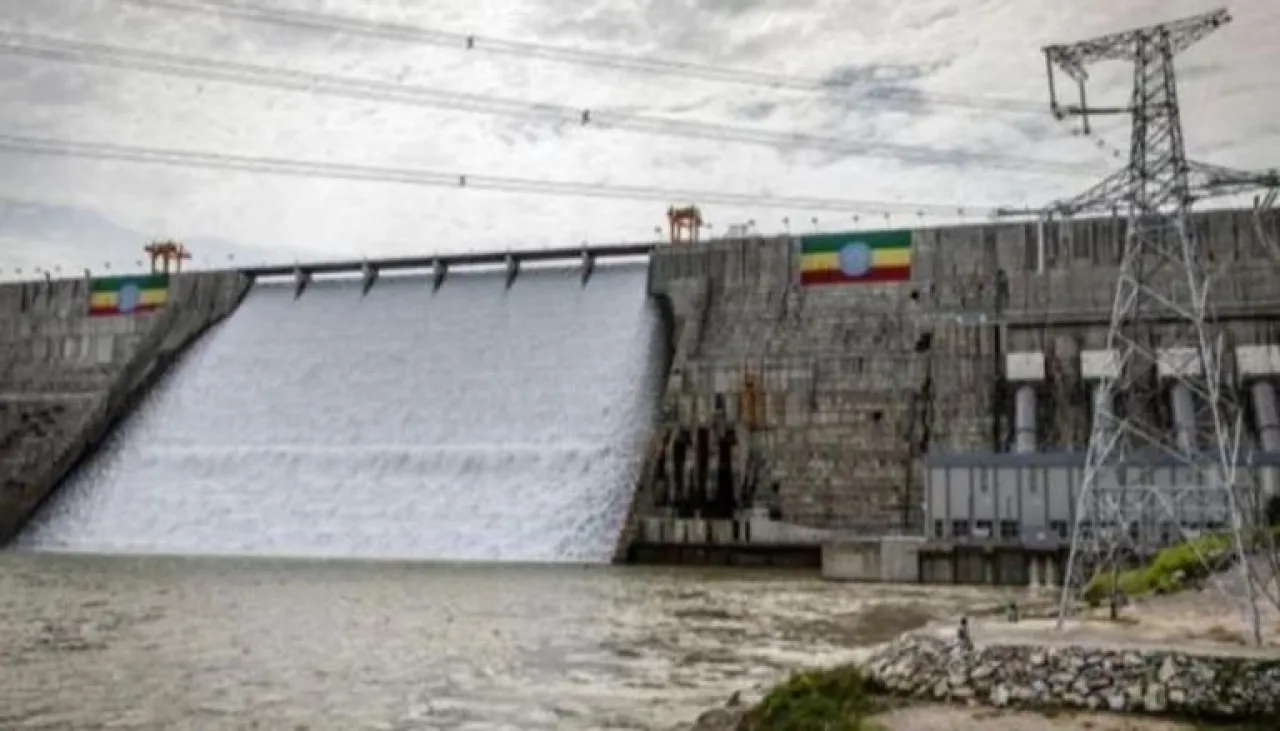
It added that the heavy rains on the Ethiopian highlands were sufficient to cause devastating floods had it not been for the balancing role played by the dam in regulating the flow of water downstream.
The ministry clarified that the Renaissance Dam, as the largest hydroelectric project on the continent, operates not in isolation but with cumulative expertise which Ethiopia possesses in managing dams and water resources, affirming that operational policies aimed at minimizing harm and ensuring a stable and balanced water flow towards Sudan and Egypt have been adopted.
Egyptian Ministry of Irrigation Statement
The Egyptian Ministry of Water Resources and Irrigation, on Friday, issued a statement regarding the developments of the Nile flood and related "reckless unilateral actions" by Ethiopia.
The ministry in its statement condemned the Ethiopian actions in managing "its illegitimate dam, which contravenes international law," adding: "These practices lack the simplest rules of responsibility and transparency, and represent a direct threat to the life and security of the downstream countries’ people, as well as clearly exposing the falseness of Ethiopia’s repeated claims of non-harm to others, confirming they are nothing more than political exploitation of water at the expense of lives and regional security."
Regarding the water situation upstream of the Nile, the ministry’s data indicate: Waters of the Nile originate from three main tributaries: the White Nile, the Blue Nile, and the Atbarah River. The Blue Nile flooding occurs between July and October each year, typically peaking in August.
The data shows that this year's flood situation at its main sources is about 25% above average, although less than last year, which was considered a high flood, so far.
The statement added: “Technically, Ethiopia was supposed to begin storing water in its dam gradually from the beginning of July until the end of October, then manage its discharge in an organized manner to generate electricity throughout the year, consistent with its repeated claims about the dam’s benefits in regulating the flood and protecting Sudan from drowning and providing electricity for the Ethiopian people. However, in late August, it was observed that Ethiopian dam operators had breached the technical and scientific rules by storing larger quantities of flood waters than expected, reducing discharges from about 280 million m³ to 110 million m³ on September 8, 2025. These actions indicate an Ethiopian rush toward completing the filling in an uncontrolled manner, aiming to reach a level of 640 meters above sea level, and then opening the middle and emergency spillways for a few hours to use them only as a 'media shot' and political spectacle in what was called the dam's inauguration celebration on September 9, 2025, disregarding water safety or the interests of the downstream countries."
The statement continued: "This was confirmed by what actually happened; as the Ethiopian operator discharged huge quantities of water the day after the so-called celebration on September 10, amounting to 485 million m³ in one day, followed by sudden and unjustified increases in discharges reaching 780 million m³ on September 27, then dropping to 380 million m³ on September 30. The Ethiopian dam's water levels showed a decrease by approximately one meter, equating to the discharge of about 2 billion m³ of stored water without justification, apart from the actions resulting from the flood itself, which exacerbated the amount of water discharged, underlying the uncontrolled and random nature of the dam's management (as illustrated in the attached figure)."
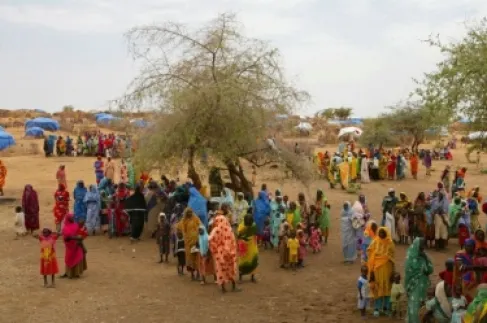
The statement also noted: "The convergence of these large and unexpected quantities of water at this time of year, along with the delay and difference in rainfall times within Sudan, combined with the increased revenue from the White Nile beyond its normal rates, led to a sudden increase in water quantities resulting in the flooding of agricultural lands and the submerging of many Sudanese villages. In the face of these emergency conditions, the operators of the Sudanese Roseries Dam had no choice but to store a small part of this water and pass the majority through its gates to preserve the dam's safety, given its limited storage capacity."
The statement added: "Therefore, the Egyptian Ministry of Water Resources and Irrigation sees that the accelerated and illegal filling of the Ethiopian dam, followed by the discharge of huge amounts of water immediately after what was called the dam’s opening celebration, was not an emergency measure, but reflects an uncontrolled and irresponsible management of a dam of this size."
It continued: "The unilateral and irresponsible management of the Ethiopian dam has altered the natural flood schedules—which usually peak in August—and created a 'manufactured flood' more severe and powerful late in the season (part of September). This reckless and uncontrolled behavior, which aims only at 'media and political showmanship', has caused severe losses to brotherly Sudan according to reports by the United Nations Office for the Coordination of Humanitarian Affairs (OCHA), threatening the lives and assets of the people of the two downstream countries. Egypt had repeatedly warned that the existence of a dam storing 74 billion m³ in contravention of international law and without a binding legal agreement, and amidst this randomness and recklessness in management, represents a permanent and ongoing risk to the downstream countries during periods of drought and flood peaks."
The ministry assured that water situation management is dynamically based on instantaneous monitoring in the upper Nile and hydrological predictions using the latest mathematical models. Through this relentless monitoring, the appropriate timings for water actions are determined, whether by increasing discharges during the peak agricultural needs season (May – August), adjusting water quantities during the flood season (July – October), or reducing them in the winter dam period (January – February). This precise management achieves the balance between optimal utilization of water, whether through using the main course for discharging water to meet various needs and generate electricity, or through the Toshka spillway in emergencies, ensuring the best use of water resources and protecting the safety of the Egyptian people."
From this foresighted anticipation of such scenarios, the ministry took proactive measures including notifying all governors on September 7, 2025, to alert citizens about the necessity to take precautions to protect their properties and agriculture established on river deposition lands, despite being against the law. This is part of the state's commitment to protecting citizens and minimizing the potential effects of the flood, affirming that these lands are naturally part of the river’s main channel and floodplain and are subject to flooding in such cases.
The statement further stated: "The lands recently submerged are naturally part of the river deposition areas which the river has traditionally accommodated with increased water discharges over the decades. However, encroachments upon them with plantations or buildings in violation have led to losses during high water levels, although these lands are not designated for permanent agriculture. Also, what is being circulated in some media platforms and social media under the name (flooding of provinces) is a false and misleading claim, as it only involves flooding some river deposition lands (lands located within the Nile River channel), which are naturally part of the Nile’s protected area and exposed to flooding at increased water levels, not the provinces as erroneously promoted."
The statement added: "The ministry points out that encroachments on the river channel pose serious technical consequences, mainly reducing the river’s discharge capacity, which is the lifeline for Egyptians. The ministry annually warns citizens and carries out significant and costly efforts to protect the plantations and properties of violators as they are part of the nation. However, continued encroachments by a few individuals harm water delivery to tens of millions of citizens and farmers, negatively impacting agricultural activity and the national economy as a whole. The Egyptian Ministry of Water Resources and Irrigation confirms that the Egyptian state, through all its agencies, monitors the situation around the clock, and that the High Dam with its storage and discharge capacities represents the primary assurance for protecting Egypt from Nile fluctuations and sudden floods. The ministry reassures citizens that the management of Egypt's water resources is conducted with high efficiency and in a studied manner considering all possibilities, ensuring water needs are met and lives and properties are protected."