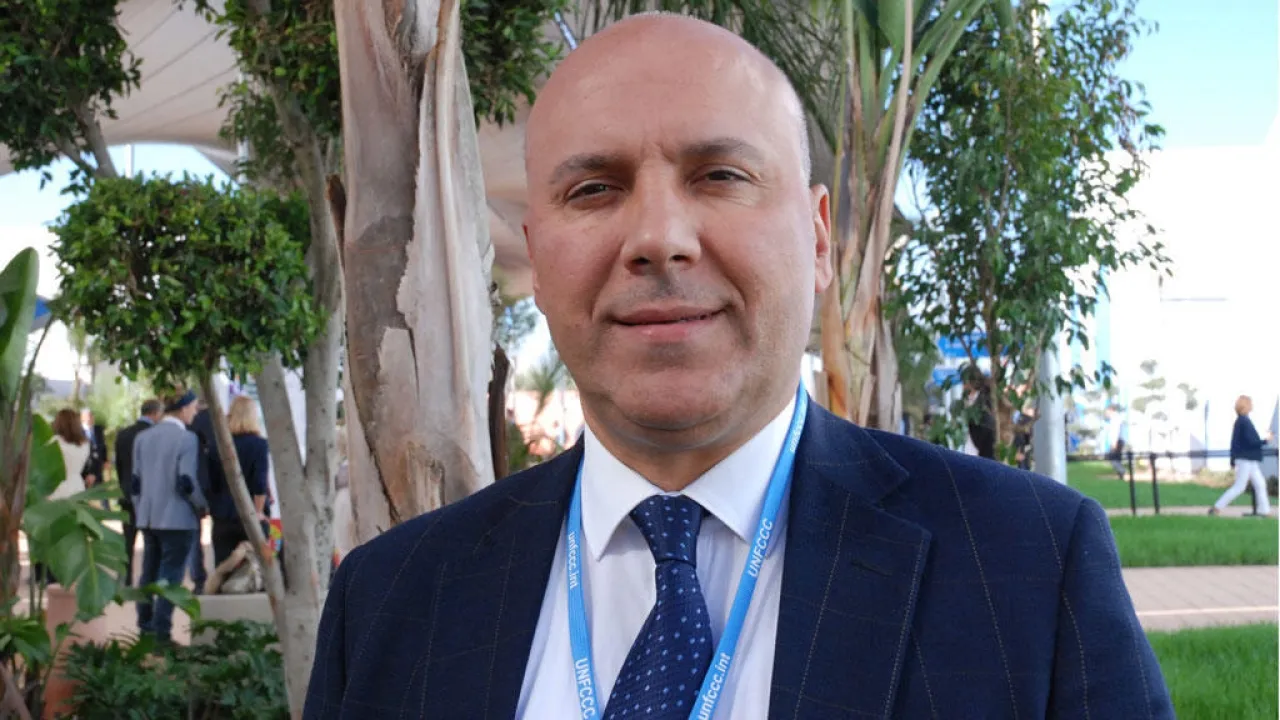
Khaberni - - The Executive Director for the Energy Encouragement and Consumption Rationalization Fund in the Ministry of Energy and Mineral Resources, Dr. Rasmi Hamza, confirmed that the total beneficiaries from the fund's programs exceeded 460,000 citizens, while direct investment amounted to about 40 million dinars and the total value of the fund's projects exceeded 100 million dinars.
During a panel titled "The Economic and Social Impact of Renewable Energy Fund Programs on Economic Development," held by the Jordanian Economic Forum with the presence of the forum's president Mazen Hammoud and several board members and the general assembly, he pointed out that the fund, established in 2014 with an initial government capital of 25 million dinars, has been leading the energy transition process in Jordan through programs targeting homes and economic sectors, stating that the achievements so far have directly impacted the lives of hundreds of thousands of families and reduced energy costs in vital sectors such as industry.
According to the forum's statement this Saturday, Hamza explained that since its founding, the fund has focused on three main pillars: achieving a direct economic and social impact on citizens, contributing to the reduction of national energy costs, and increasing the competitiveness of productive economic sectors.
He emphasized that Jordan started the first major solar energy stations with a capacity of 50 megawatts, then launched wind projects in Tafila with a capacity of 117 megawatts, marking the beginning of a broad wave of investments in renewable energy.
He noted that the spread of solar water heaters in Jordan did not exceed 13 percent in 2014. However, with the programs funded by the fund, the number of benefiting families has risen to more than 70,000, in addition to 8,000 poor families being fully outfitted with free solar systems, aiming to install 90,000 solar heaters by 2030.
He continued, stating that the fund's programs provide direct savings to citizens, as a solar heater saves between 20 and 25 dinars per month, which equals 240 to 300 dinars annually for a family. Moreover, agreements with more than 250 local associations have been signed to reach villages and rural areas, enhancing the nationwide spread of these projects.
Dr. Hamza said that the fund's programs have extended to include all sectors, with 630 places of worship equipped with solar energy systems and 15 public institutions, 20 government buildings, and 33 health centers, along with 135 schools as part of a royal initiative for heating and cooling. The agricultural sector has benefitted from energy systems installed in 240 farms, while energy rationalization programs have been implemented in 201 small and medium-sized factories, and 12 hotels through specialized energy audits.
He announced that all places of worship, including mosques and churches in Aqaba, use renewable energy systems, while 650 mosques and churches in the kingdom use energy systems, in addition to 15 shelters and many public schools.
He added that energy studies in the industrial sector showed the potential to achieve savings ranging between 30 and 40 percent of the energy bill in most factories, reaching up to 60 percent in some cases, a figure he described as "staggering" given the industrial energy consumption.
He pointed out that the fund has signed financing agreements with local banks to facilitate citizens' access to soft loans, where the citizen pays simple monthly installments along with the fund's direct support.
He affirmed that the fund focuses not only on the economic aspect but also considers the environmental and social dimensions, including contributing to reducing emissions in line with Jordan's commitments under the Paris Agreement and improving air quality and life in cities.
He mentioned that the strategy continues until 2030 with a primary goal of reducing reliance on conventional energy, alleviating import costs for the state, and enhancing citizens' welfare through reducing electricity bills.
At the end of the seminar, an extensive discussion took place among the attendees, addressing opportunities to expand the scope of benefit from the fund's programs, the challenges related to financing mechanisms, and the importance of partnership between the public and private sectors in enhancing the journey of energy transition and supporting sustainable economic development plans.