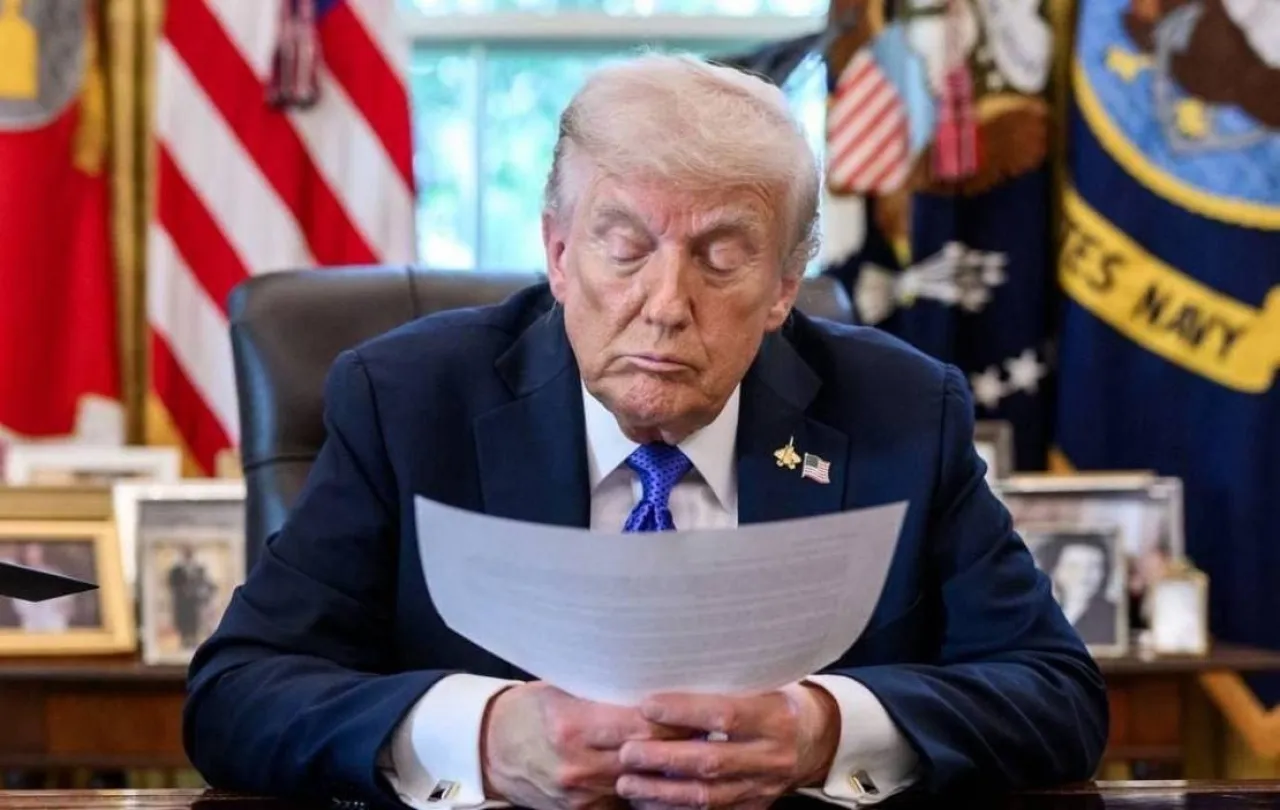
Khaberni - Amid rapid interactions with US President Donald Trump's plan to stop the war in Gaza, widespread confusion dominated both the Israeli political and media scene. While Trump showed enthusiasm and celebrated as if Hamas had fully agreed to the proposal, the responses from the Hebrew press and its military and political correspondents revealed a completely different picture, confirming that what happened was not acceptance but rather a Palestinian attempt to open a new negotiation door on most controversial items.
The military correspondent for the Walla website, Amir Bahboot, described the scene as Trump "celebrating as if Hamas had agreed 100%," confirming that this is not the reality. In the same context, the Channel 14 correspondent said that Trump fell into the "trap of the Hamas statement" after publicly calling on “Israel” to stop the attacks in the Gaza Strip, which made the United States appear to adopt the Hamas narrative for the first time since the war began.
The political correspondent for the Army Radio confirmed that Washington broke the rule of "no negotiation under fire," pointing out that today’s drama in Jerusalem reflects the magnitude of shock concerning Trump’s call for an immediate halt to bombing considering that Hamas is “ready for peace.” Channel 12 correspondent, Dafna Liel, focused on the importance of Trump asking “Israel” to stop firing until negotiations were concluded, a step that the Israeli security establishment had feared over recent months.
The anger was also reflected in other media coverage, where Channel 11's correspondent described the Palestinian response as a “victory for the Al-Thani criminal family,” referencing Qatari support. Meanwhile, Channel 12 reported that an Israeli official was surprised by Trump's announcement, especially since he considered Hamas' response a rejection of the Washington plan, and emphasized in his consultations the need to coordinate the stance with the White House to avoid the impression that Hamas had granted tacit approval.
Channel “Kan” correspondent Suleiman Maswadeh clarified that Hamas did not provide an affirmative answer, but instead requested to negotiate on core issues such as prisoners and an alternative authority in Gaza, and refused to relinquish their arms. He added that Trump forced “Israel” to temporarily stop fighting for negotiations, allowing Arab countries to achieve a new tactical victory after Netanyahu introduced modifications to the plan, bringing the entire initiative into a state of radical change. Channel “Kan” described the situation as Trump having “tarnished Israel’s reputation” which could no longer say that Hamas's response was unacceptable.
On the other hand, Channel 13 correspondent, Hezi Simantov, considered that “Hamas emerged victorious from all this,” while military analyst Yossi Yehoshua emphasized that the Israeli army is now in a defensive position after Trump prevented negotiation under fire, confirming that the Chief of Staff had issued orders to prepare for the first phase of the prisoner release plan.
While Israeli confusion increases, the scene becomes clearer on another front: Hamas succeeded in transforming the American plan into a new platform for renegotiating from a position of strength, while Netanyahu finds himself trapped between the pressures of Trump and the demands of the Israeli domestic scene, at a time when “Israel” seems unable to formulate a decisive stance that matches the gravity of the current political and military moment.