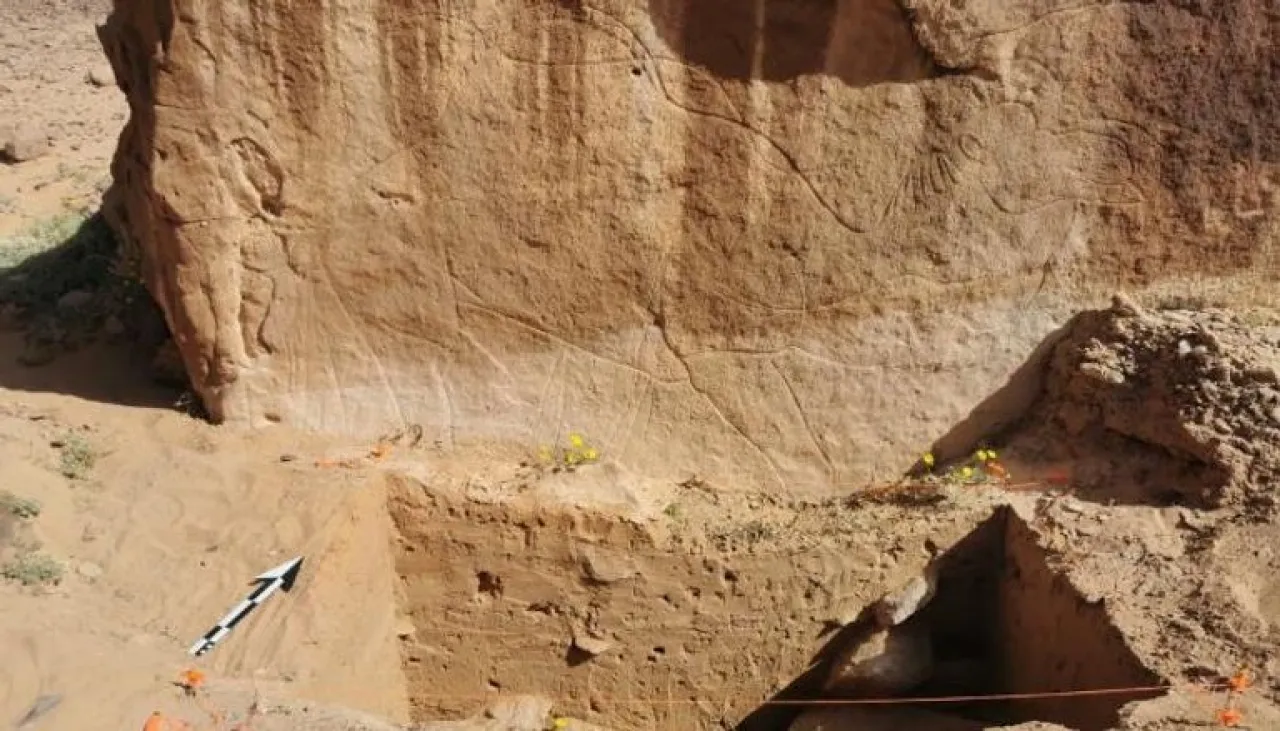
Khaberni - An international team of researchers has uncovered a collection of massive rock inscriptions in northern Saudi Arabia, dating back about 12,000 years, representing life-sized animals such as camels, deer, and mountain goats, indicating the presence of a human community in the area during an unknown period in history.
A study published in the journal Nature Communications stated that these inscriptions provide direct evidence of the availability of fresh water sources in northern Arabia, which helped stabilize human settlement and expansion in the area despite harsh climatic conditions.
The study explained that northern Arabia experienced a significant scarcity in evidence of human activity between 25,000 and 20,000 years ago, and until about 10,000 years ago, a period characterized by severe drought, but it was not entirely devoid of humans.
The researchers pointed out that this scarcity reflects the difficulty of environmental conditions that limited community stability or made their activities less apparent in the archaeological record.
The study also confirmed that humans in other regions of the Middle East managed to adopt agriculture and herding and adapt to diverse environments during the same period, while northern Arabia remained less clear in human activity.
Previous research showed that human activity related to oases in the region began approximately 10,000 years ago, which coincides with the discovery of the new inscriptions.
The surveys and excavations conducted by the research team in the Nefud Desert analyzed sediments dating between 16,000 and 13,000 years ago, showing a gradual increase in water availability in the form of seasonal lakes, creating a more suitable environment for human life.
The discoveries confirmed that the availability of water encouraged human artistic expression and the production of material tools reflecting their continuous presence in the region.
The discovered inscriptions included more than 130 life-sized carvings, representing camels, mountain goats, horses, deer, and wild cattle, alongside smaller engravings depicting humans and animals, reflecting the richness of the artistic landscape and the diversity of symbols among the inhabitants.
Additionally, the team found 532 stone tools from multiple sites, and the analyses suggested that some of their forms might indicate cultural links with other communities in the Middle East, reflecting early communication networks between societies.
The researchers suggested that the same groups produced the inscriptions and tools together, with a cautionary note on the direct relationship between them due to the lack of conclusive evidence.
The study affirmed that the absence of a direct linkage does not diminish the importance of the findings, but rather highlights human capability to adapt to harsh climates and manage resources in a changing desert environment.
It explained that the massive inscriptions reflect a social organization that allows allocation of time and effort to tasks not solely linked to survival, indicating a minimum level of social stability thanks to the availability of seasonal water.
It noted that the region was not just a barren desert as previously believed, but an active environment that witnessed artistic and human civilizations contributing to the development of complex tools and continual cultural communication.
The researchers mentioned that the Great Nefud Desert, with its area of 65,000 square kilometers and dunes reaching up to 150 meters high, still holds many archaeological discoveries, including remains of giant elephants, horses, extinct deer, and the oldest stone traps in the world, confirming that the Arabian Peninsula has been a home to human life for thousands of years.