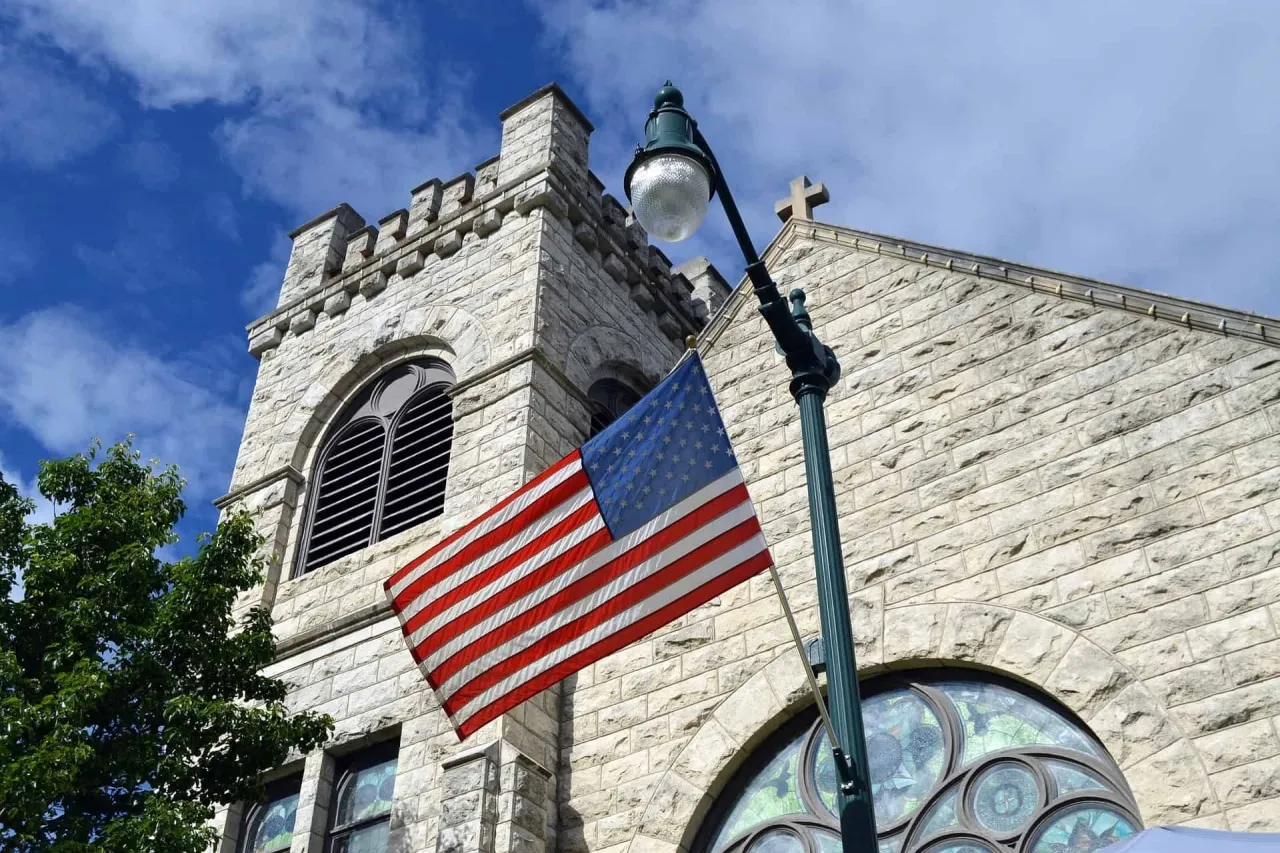
Khaberni - America is expected to witness the closure of 15,000 church doors this year, an unprecedented number, and much larger than the few thousand expected to open their doors according to sectarian reports and church consultants.
According to "Axios", the unprecedented contraction is expected to continue over the next decade, threatening to leave gaps in communities across the country, especially in rural communities where churches often act as providers of food aid, childcare, and disaster relief.
The Big Picture
The decline of traditional brick-and-cement churches comes at a time when a record number of Americans (29%) identify themselves as religiously unaffiliated, with only 62% identifying themselves as Christians, down from 78% in 2007, according to the Pew Research Center.
Meanwhile, large non-denominational and generally evangelical Christian churches are increasingly influencing American life, driven by charismatic leaders, sympathetic politicians, and social media.
This has shaken the country's established religious foundation, leading to fewer and fewer communities built around local churches, but there is increasing pressure from conservative citizens and government officials to inject more religion into schools and public institutions.
The site notes that the record number of church closures expected this year stems from struggles faced by many churches, including retaining full-time pastors, as stated by Tom Rainer, the former president of "LifeWay Christian Resources," an entity affiliated with the Southern Baptist Convention which provides resources for churches.
In a widely published article in "Baptist Courier," Rainer, a church health consultant, said waves of church closures are coming, and that another 15,000 American churches will move from full-time to part-time pastors.
Estimates from the National Council of Churches indicate that 100,000 churches in the United States from various denominations will close their doors over the next few years, confirming Rainer's analysis.
This number will approximate nearly a quarter of the churches in the country, which today range between 350,000 and 400,000 churches.
Major Protestant denominations such as Methodist, Presbyterian, and Lutheran represent nearly all the churches that have been closed, as Ryan Berg, a political scientist and author of "Religion Graphs" on "Substack," said.
Berg, author of "The Fading Church: How the Emptiness of Moderate Groups Hurts Democracy and Faith and Us," stated that closures represent a shift away from strong denominations in the United States that brought together people from different political perspectives.
As a result, many communities are suffering from the presence of empty church buildings, which may be difficult to sell because they are often next to historic cemeteries.
Surprisingly
The number of Catholic churches is also declining, partly due to ongoing lawsuits for sexual abuse committed by priests, as stated by Andrew Chesnut, head of the Bishop Walter F. Sullivan Catholic Studies Department at Virginia Commonwealth University.
The oldest Catholic diocese in the country, the Archdiocese of Baltimore, has announced that it will reduce its churches by about two-thirds, citing declining attendance and aging buildings.
Chesnut said: "I believe that some of the dynamics recently seen in the American Christian scene are these large non-denominational churches only, which are typically charismatic."
Nevertheless, large evangelical churches tend to have fluctuating memberships despite their increasing influence on Republican Party policies.
"Axios" quotes Chesnut, stating that big churches are undergoing major shifts, with many new individuals joining each year, but many also leave because they do not build strong, deep connections.
Chesnut emphasizes that their success depends on one or two leaders, and that death or scandal could damage or end these churches.
Chesnut predicts that big churches will face hits in their membership numbers in the future if younger Americans feel forced to accept religion in public spaces.
He elaborated in this context that "he believes evangelicals will pay the price for their close association with the slogan 'Make America Great Again'."