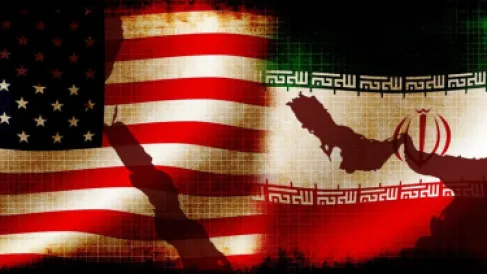
Khaberni - An American official revealed that the administration of President Donald Trump is pushing Iran to accept 4 stringent conditions as a basis for new nuclear negotiations, and to avoid "a possible military escalation" with a green light from Washington.
The source explained to "The Washington Post" that the four conditions include conducting direct negotiations, stopping the enrichment of nuclear materials, limiting the missile program, and stopping the funding of its proxies in the Middle East.
He added that these conditions, which were among the main obstacles in previous rounds, are expected to face rejection from Tehran.
He continued that the American administration believes that the time has come to escalate pressure, and that the sanctions will create "the environment" for a "diplomatic solution".
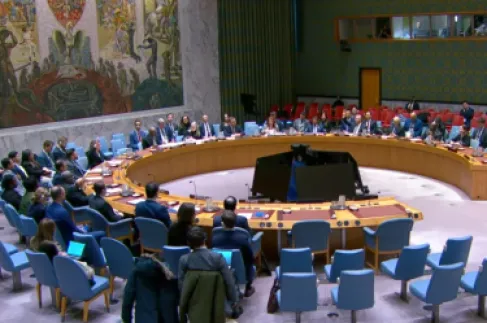
Previously, the United Nations had reimposed sanctions on Iran over its nuclear program through the mechanism known as "snapback".
The "Washington Post" says that reinstating sanctions on Tehran has caused confusion in Iranian policy and increased pressures on the country's economy, which is already suffering from the repercussions of previous sanctions.
Meanwhile, experts warn that the continued deadlock in talks could open the door for renewed conflict between Iran and Israel, which could lead to a long-lasting cycle of violence.
Possibility of Renewed Confrontation
Waleed Nasr, a professor of Middle Eastern Studies at Johns Hopkins University, told "The Washington Post", that "not returning to negotiations increases the chances of renewed confrontation".
He noted that "resuming negotiations would effectively act as a stop to hostilities between Israel and Iran".
On the diplomatic front, a European official expressed concern that reimposing sanctions is not the best option, noting that "the diplomatic door is still open. We do not believe in a military solution to the nuclear proliferation crisis".
Earlier, Israeli Prime Minister Benjamin Netanyahu emphasized that Israel retains the right to take further military actions against Iran, asserting that "preventing Iran from rebuilding its military nuclear capabilities is vital".
Negotiations Difficult with No Progress
The Iranian and American negotiators met in 5 rounds during the summer, which failed due to "the lack of seriousness on the Iranian side", according to an American official; on the other hand, Tehran accuses Washington of sabotaging the chances for diplomatic solutions.
The talks stopped after an Israeli attack on Iranian facilities in June, followed by a 12-day conflict between the two sides and American strikes on three Iranian nuclear sites, concluding with a fragile ceasefire sponsored by Washington without a clear agreement or diplomatic path.
While security experts see the resurgence of direct conflict as unlikely, they warn of the possibility of entering a cycle of "low-intensity conflict" characterized by mutual attacks between the two sides.
Sanctions and Iranian Reactions
The sanctions that were reinstated under the United Nations resolution include a ban on conventional weapons, a ban on uranium enrichment, and restrictions on Iran's ballistic missile program, alongside travel bans and asset freezes.
These restrictions were previously lifted under the 2015 nuclear deal negotiated between Tehran, the administration of former President Barack Obama, and other countries, and their reinstatement removes one of the last remnants of the agreement from which President Donald Trump withdrew during his first term in office.
Despite Iran's confirmation of its ability to withstand pressures, Iranian President Masoud Bazeshkian at the United Nations General Assembly noted that "the wall of mistrust with the United States remains very high".
At the same time, the Iranian currency fell to record levels, leading to a sharp rise in inflation rates.