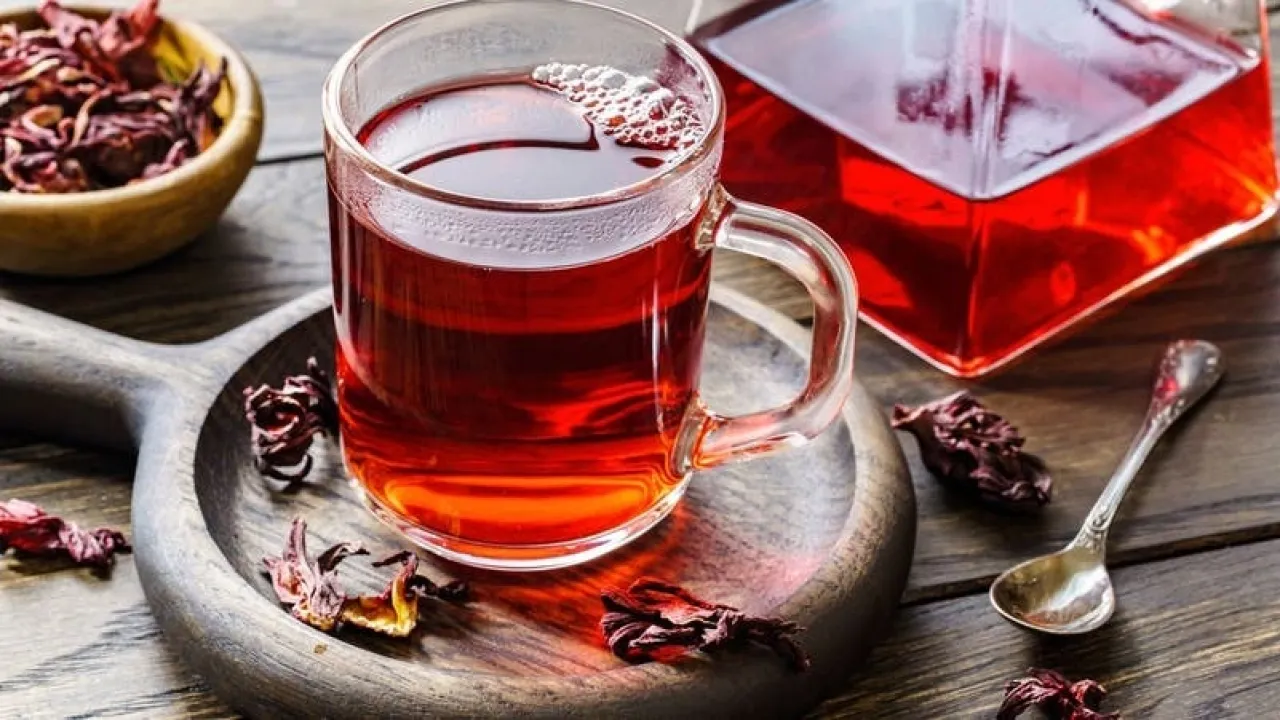
Khaberni - It is known that many peoples have used hibiscus tea for many centuries around the world, from parts of Africa and Latin America to Southeast Asia, for its distinctive taste as well as its clear therapeutic abilities.
Scientists have recently discovered that many of the traditional health benefits repeated by generations are supported by strong scientific evidence, according to what was published by the Times of India newspaper.
Health experts currently call hibiscus tea "the super drink" as it seems to benefit many parts of the body; it is a drink rich in antioxidants, plant compounds, and minerals.
Many studies have indicated that it can help protect the heart, regulate blood pressure, support healthy cholesterol levels, and even help regulate blood sugar, as follows:
1. Lowering Blood Pressure
Numerous human clinical trials have shown that regular consumption of hibiscus tea can lower systolic and diastolic blood pressure.
An improvement in systolic blood pressure was observed in individuals with prehypertension or stage 1 hypertension by about 5-7 mm Hg after a few weeks of daily use.
Hibiscus works similarly to mild blood pressure medication through effects such as mild diuresis and relaxation of blood vessels.
2. Improving Cholesterol and Heart Health
Studies have also indicated that hibiscus tea can lower low-density lipoprotein LDL cholesterol and triglycerides, while sometimes increasing high-density lipoprotein HDL cholesterol.
Lower levels of LDL cholesterol and triglycerides are linked to a decreased risk of heart disease, thereby making hibiscus tea beneficial in supporting cardiovascular health.
3. Regulating Blood Sugar
Hibiscus tea has also proven its ability to lower fasting blood sugar in humans and can help manage type 2 diabetes.
Some studies, conducted on animals and humans, have pointed out that hibiscus improves the body's control of blood glucose levels after meals.
4. Weight Management
Since hibiscus tea is calorie-free, it can help slightly in weight loss when combined with a healthy diet and exercise.
Some research (mostly using more concentrated extracts of hibiscus) suggests that it might reduce fat accumulation and improve metabolic health and help reduce body weight or fat.
5. Strong Antioxidant Properties
Hibiscus contains high levels of anthocyanins and phenolic acids that act as antioxidants neutralizing "free radicals," which are harmful molecules that damage cells and contribute to aging and diseases like cancer.
According to several studies, hibiscus tea also increases the antioxidant capacity in the blood.
6. Alleviating Inflammation Markers
Thanks to its antioxidants and biologically active compounds, hibiscus tea appears to alleviate markers of inflammation.
Inflammation is a cause of many chronic diseases, such as heart disease, arthritis, and possibly some cancers.
Studies on animals and small human trials show that hibiscus can help alleviate inflammation.
7. Supporting Liver Health
Some evidence from studies conducted on laboratory animals indicates that hibiscus extract protects the liver from damage caused by toxins or a high-fat diet.
Hibiscus intake can also reduce fat buildup and improve liver function indicators.
While the human evidence is weaker, early trials are promising.
8. Antibacterial and Antimicrobial
Hibiscus contains compounds that seem to inhibit the growth of certain types of bacteria and fungi in laboratory studies, indicating potential benefits for gut health or infection prevention, although more research on humans is needed.
9. Increasing Hydration and Electrolytes
Since hibiscus tea is caffeine-free, it does not cause diuretic effects like caffeinated tea.
It can help hydrate the body. The tea provides rare minerals like potassium, calcium, and magnesium, which help maintain fluid balance and support nerve and muscle functions.
10. Hormonal Balance and Reproductive Health
Traditional uses of hibiscus include treating symptoms of premenstrual syndrome PMS and menopause as it contains phytoestrogens, which can act as mild forms of estrogen.
Some studies suggest it can reduce hot flashes or mood swings, though the evidence remains preliminary.
It is worth noting that while hibiscus tea is generally safe for many healthy individuals, there are also some important cautions.
Like all potent herbs, it also has precautions, as not everyone should drink it in large amounts, as some medical conditions or medications might interact with its effects.
Studies typically recommend drinking two to three cups of hibiscus tea daily (about 500-700 ml) for up to 4-6 weeks.
As for the timing of intake, after meals or between them is suitable.
Since it is caffeine-free, it can be drunk in the evening without any problems sleeping. Some people prefer to drink it before bedtime to relax.