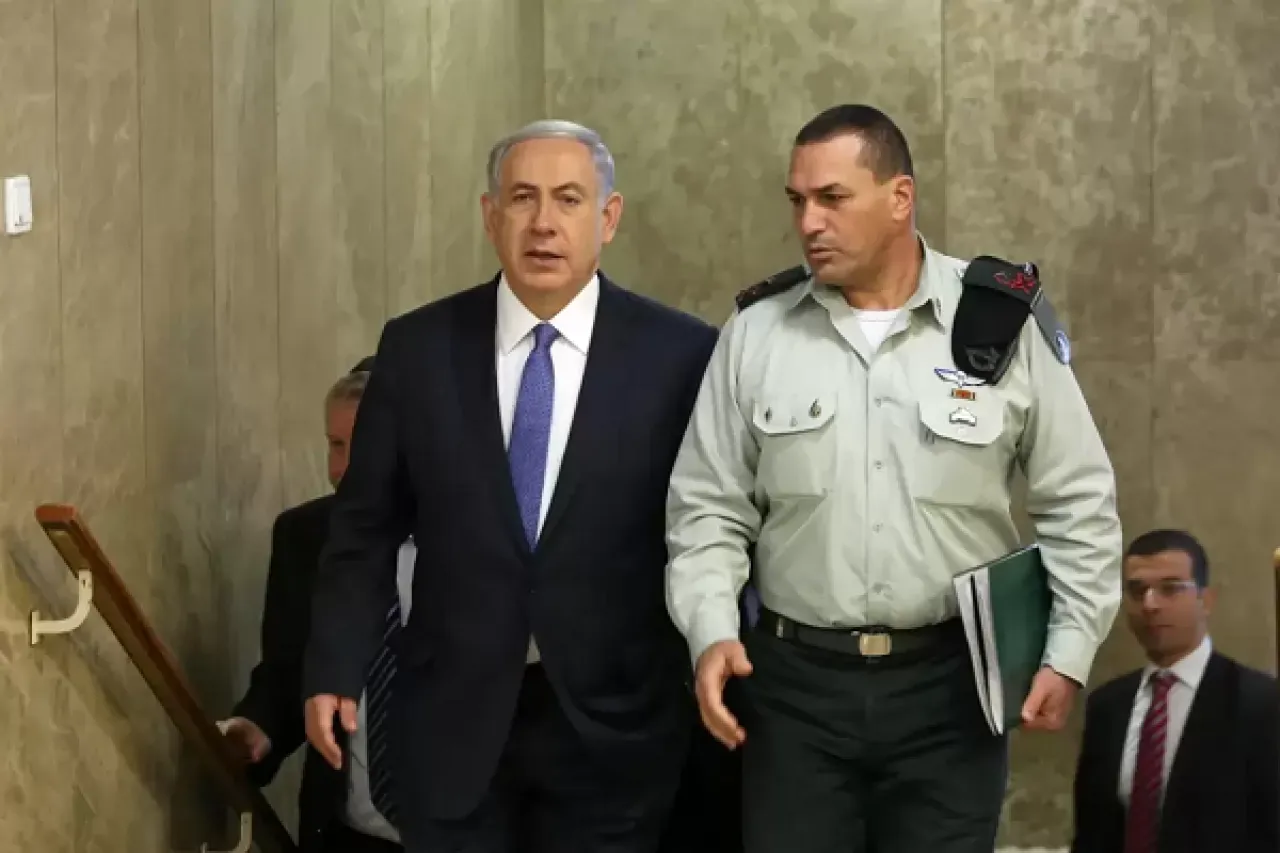
Khaberni - Yisrael Ziv, the former head of operations in the occupation army, considered that the speech of the occupation Prime Minister Benjamin Netanyahu at the White House before US President Donald Trump and the entire world, tried to present the ten-point plan with a personal approach showing it as an “Israeli victory”.
However, Ziv pointed to a fundamental flaw in the current situation, in which the final word remained with Hamas after "Israel" agreed to the plan, whereas it should have been the opposite: the strong party should have retained the final decision. He explained that this was due to Israel's own mismanagement; when it entered into the prisoner deal in January, it could have proposed a settlement on its terms and appeared victorious, but its political weakness led it to block the second phase and return to fighting instead of finalizing an agreement.
Ziv stated that Netanyahu has continued this approach since last May, after Hamas accepted his partial proposal on August 17, but he chose to obstruct any opportunity for a comprehensive settlement. The result was pressure from the Arab state leaders involved on Trump to force Netanyahu to comply, along with an unnecessary attack in Doha which left Trump indebted to the Arabs and prompted him to overturn the table on Netanyahu. Thus, Israel found itself in the final stage of the political process in a humiliating situation, waiting for Hamas's approval instead of imposing its terms on them.
Despite criticisms of this course and the cost of the prolonged war, Ziv believed that Trump's proposal itself was excellent and achieved Israel's full goals: the return of prisoners and the removal of Hamas from power in Gaza. However, he warned that the celebration was premature, as such agreements usually go through stages and obstacles, and require a strong political will to succeed, or else they are easy to sabotage.
Ziv highlighted major gaps threatening the implementation: the absence of a police force to take control of areas the Israeli army withdraws from, which could quickly be filled by Hamas or other organizations and force the occupation army to return; the absence of an interim government to take responsibility in Gaza, which would likely lead to chaos; the lack of a clear plan or timeline that prioritizes steps between withdrawal and disarmament; and finally, the issue of the "security perimeter" i.e. the duration of the Israeli occupation army's presence and who will take it over later, with the Israeli rejection of a Palestinian armed forces presence.
Ziv clarified that the agreement eventually returns Gaza to the Palestinian Authority, even if it is uncomfortable for Netanyahu's government, and saw a benefit in that the Authority would not rush to declare a state despite international support, to avoid a direct confrontation with "Israel". He concluded that Netanyahu's decade-long policy to separate Gaza from the West Bank and weaken the Authority had practically failed.
He also considered that the religious nationalist current, led by Bezalel Smotrich, suffered a harsh defeat in Washington, as their aspirations related to an endless war, occupation of territories, annexation of Gaza and the West Bank, and the establishment of new settlements experienced a resounding fall. He predicted that this current would pay a political price, but emphasized that it was not enough.