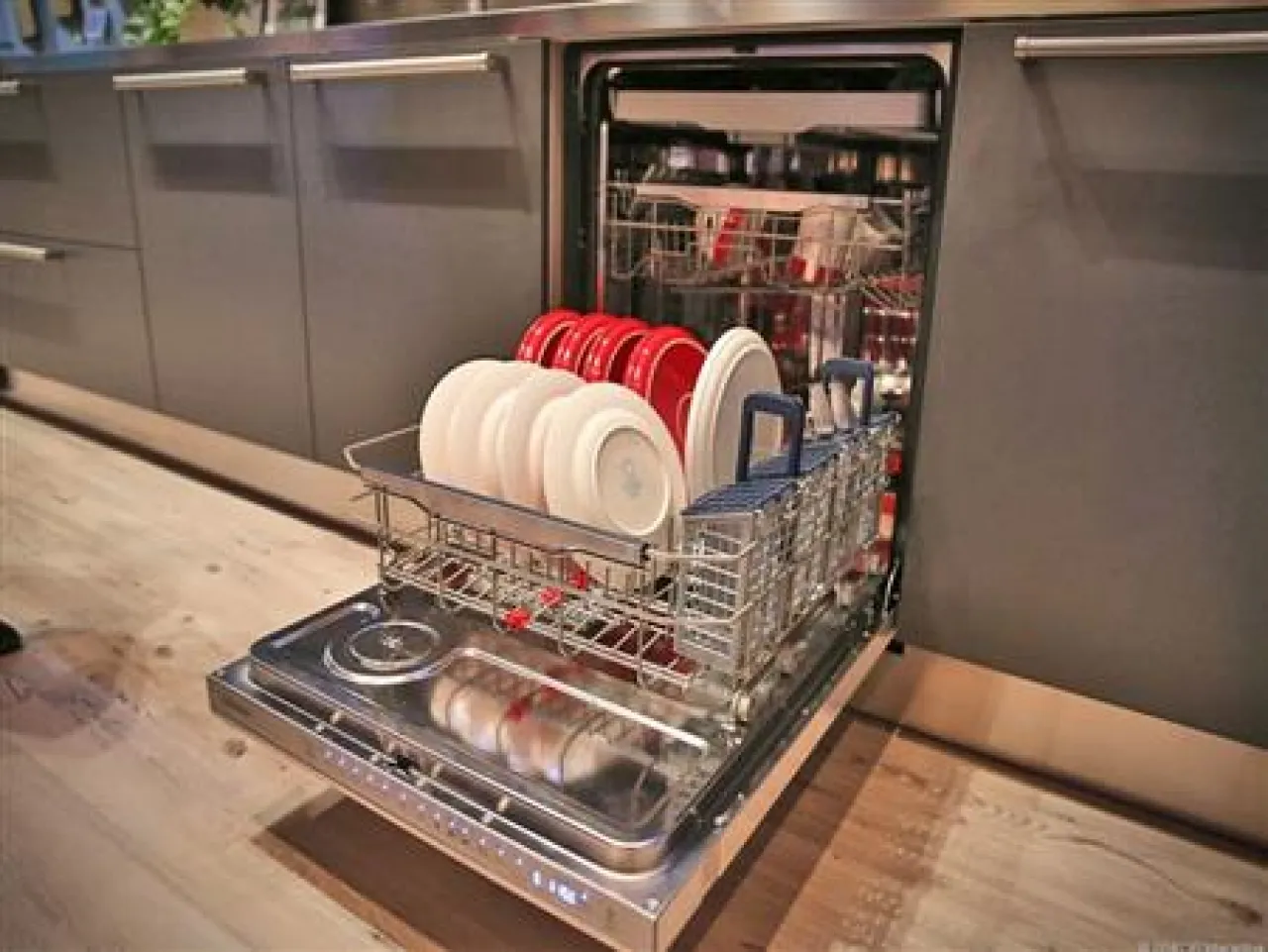
Khaberni - The dishwasher is a special electrical appliance for the kitchen that saves effort and time, but are you making the mistake of cleaning all your utensils, dishes, and cups, regardless of the materials used in their making, inside the dishwasher? If your answer is "yes," you might be damaging your kitchen tools and the dishwasher itself! Thus, here are items forbidden from being placed in the dishwasher, in the following lines, to avoid damaging them through mechanical washing and to extend the life and maintain the quality of the dishwasher for a longer time.
Wooden spoons, bowls, and cutting boards can have their natural oils, which prevent the wood from drying out, stripped away by dishwasher detergents. When these oils are removed, the wood begins to crack.
Instead, it is advisable to wash wooden items manually with a mild cleaner mixed with warm water, without soaking, as this can cause the wood to swell and deform. However, if the housewife feels that the wood needs disinfecting, she should use a mild solution of chlorine bleach (quarter cup) and warm water (half a gallon).
Kitchen knives should not be washed in the dishwasher, to avoid scratching the protective layer, causing rust, damaging the edges, and loosening and splitting the wooden handles. Rather, it is better to wash all types of kitchen knives by hand.
Graters and strainers should not be placed in the dishwasher; in this context, this could cause rusting of the graters and strainers. Additionally, it is nearly impossible for the water stream to remove all food particles from these tools. Therefore, it is preferable to wash them manually for the best results.
Cookware made of cast iron lasts long when properly cared for and protected from rust by rubbing them with oil, which penetrates the iron and leaves a perfect cooking surface. Conversely, washing cast iron cookware in the dishwasher, due to the harsh detergents and water, will make the aforementioned cookware unfit for use!
Milk glass tableware and utensils, milk glass is a type of opaque white or transparent glass that can also come in various colors such as blue, pink, black, and yellow, known for its smooth non-transparent texture and attractive luster, and is used to make tableware and utensils... The antique milk glass utensils may turn yellow after being washed several times in the dishwasher due to the high heat and strong detergents. Therefore, wash them manually to maintain their beautiful appearance.
Aluminum pans and utensils become dull and stained with white spots when washed using a dishwasher, even if the pan is marked "dishwasher safe". It is best to wash them manually. To solve the problem of discoloration and stains, it is effective to make a paste of cream of tartar and warm water, spreading the paste over the utensil, then washing it with water.
Copper pans and mugs are beautiful but require extra effort to keep them shiny. They do not withstand the dishwasher, which immediately damages the finish due to its specific detergent.
Kitchen utensils made of natural stone do not overestimate the durability of kitchen tools made of natural stone, such as a pizza stone, mortar and pestle, or a cutting board designed from solid granite, as these items are exposed to high heat and abrasive dishwasher detergents, which could dull the stone and may cause cracks and breaks. Therefore, the best cleaning method depends on the type of natural stone; granite or rocks are primarily cleaned with water and a brush, and just a little dishwashing liquid is sufficient. Tools made from non-porous stone and covered with a polished layer might be safe for use in the dishwasher, but the best option is to wash them manually.
Kitchen ornaments like unique salt and pepper shakers, delicate ceramic figurines, and wooden decor pieces add a beautiful touch to your kitchen, but they are not suitable for the dishwasher, as these pieces are generally fragile and prone to breakage in the turbulent environment of the dishwasher. Therefore, take care to wash them manually and handle them gently.
Insulated mugs While the dishwasher may seem like the ideal solution for cleaning insulated mugs, the narrow spaces and high temperatures inside the specific electrical device could weaken the mugs' insulating properties. Therefore, they should be gently brushed with a bottle brush to maintain their cleanliness and effectiveness.
Pressure cooker lids While pressure cookers can be washed in the dishwasher, their lids do not withstand cleaning using the mentioned machine. Each lid contains valves that control the efficiency of the cooker's operation, and dishwasher action could push small food particles into the valves and openings, causing malfunctions! Harsh chemicals can also damage the rubber or silicone seals in the lid.
Non-stick pans While many non-stick pans are labeled "safe for dishwasher use," the harsh detergents and very high drying temperatures negatively affect the non-stick layer. Note that when the first sign of surface damage appears, it is time to buy a new pan, as when the non-stick surface is scratched, cracked, or peels, it can release dangerous toxins into the food!
Ceramic pans and cookware Ceramic pans and cookware are becoming increasingly popular, it is important to note that not all mentioned cookware is made from ceramic; instead, there is a ceramic coating bonded to the cookware metal, which could be cast iron, aluminum, copper, or stainless steel. The housewife should wash ceramic cookware manually, as dishwasher detergents may contain bleaching agents and citric acids that are too harsh on the final touch.
Acrylic or melamine dishes Lightweight, unbreakable plates made of acrylic or melamine are very popular due to their bright colors and patterns. However, high water temperatures, drying, and harsh dishwasher detergents can damage the plates after several washes, especially in cheap sets that may show cracks and color loss. Thus, it is best to wash them manually.
Printed or hand-painted glassware While commercial printing technologies on glassware have improved, this does not make them safe for washing in the dishwasher due to the strong detergents and the force of the spray, which can remove the paint in just one or two washes.
Thin plastic containers Butter dishes and ready-to-use food storage containers should not be cleaned in the dishwasher, as high heat can cause them to melt or warp.
However, when placing containers in the dishwasher, it is advisable to use the top rack and skip the high-heat drying cycle, opting for air drying instead.
Containers with paper labels There is no problem putting jars in the dishwasher after removing the paper labels. Otherwise, the paper and adhesive may fall off and clog the dishwasher's drain and food disposal system.
Golden-colored flatware Flatware with a golden color will lose its color and change in the dishwasher due to the strong detergents. In addition, electronic kitchen tools should not be exposed to water, such as spice grinders and coffee grinders, with all their metal and plastic parts, and vegetable peelers, as these are pieces forbidden from being placed in the dishwasher.