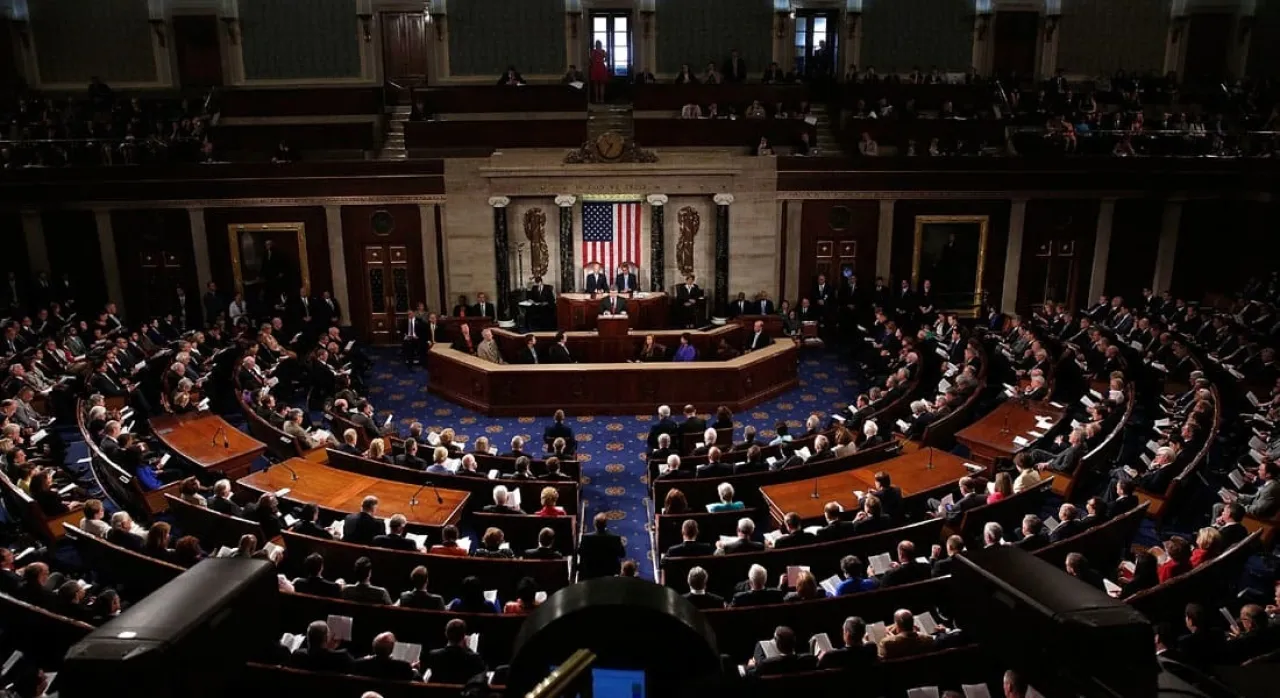
Khaberni - The US Congress is experiencing a severe political deadlock over healthcare and spending files, preventing the passage of a temporary budget before the start of the new fiscal year tomorrow, Wednesday, which threatens to shut down the American Government for the first time in seven years.
After the failure of Democrats and Republicans to reach an agreement, thousands of government workers fear their paychecks may be stopped or even lose their jobs. The government will officially close at one minute past midnight local time today, Tuesday, if the Senate does not ratify the bill passed by the House of Representatives to extend government funding for seven weeks, until the House concludes the discussion of the annual spending bill.
The Democrats in the Senate insist on not voting on it unless the Republicans agree to extend the healthcare program, along with other demands, while President Donald Trump and the Republicans refuse any negotiations, claiming that the bill is straightforward and free of contentious points.
It is not yet clear whether either party will change their stance before the deadline this evening.
Senate Minority Leader Chuck Schumer said yesterday, after meeting with Trump at the White House, which did not achieve any noticeable progress: "Now the ball is in the President's court. He can prevent the shutdown of government institutions if he can convince Republican leaders to agree to our demands."
For his part, American Vice President J.D. Vance, who attended the meeting, said: "I think we're about to enter a shutdown crisis because the Democrats will not act wisely."
Although the stalemate between the parties concerning government spending is common in Washington, this current deadlock comes at a time when Democrats see a rare opportunity to leverage their influence to achieve their political goals, while their voters look forward to challenging Trump.
The Republicans, who hold a 53-47 majority in the Senate, are expected to need at least eight votes from the Democrats to end the prolonged discussions and pass the bill with a 60-vote majority, as Republican Senator Rand Paul from Kentucky is expected to vote against the bill.