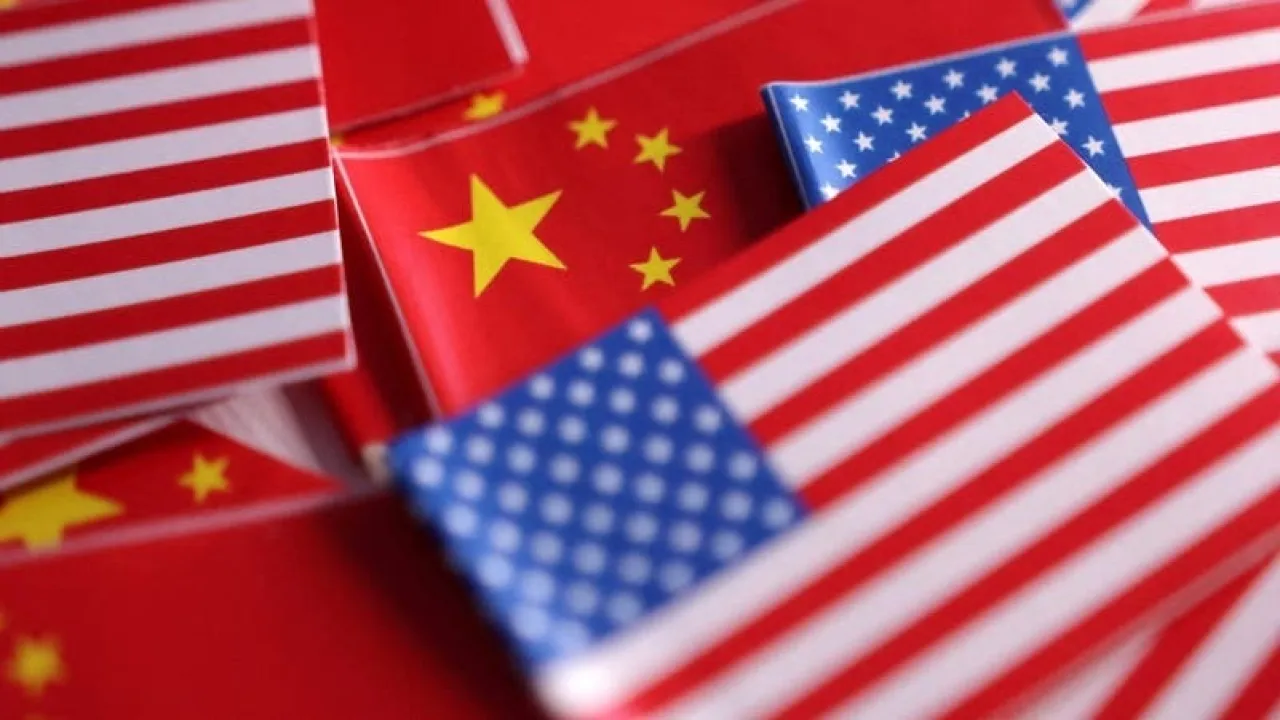
Khaberni - This week, a new visa program for China is being launched, aimed at attracting foreign technical talents, a step seen as bolstering Beijing's chances amid its geopolitical rivalry with Washington. The new visa policy pushes those in the United States seeking jobs in the country to look for alternatives.
While China does not suffer from a shortage of skilled local engineers, the program is part of Beijing's efforts to portray itself as a country welcoming of foreign investments and talents, where increasing trade tensions due to American tariffs are casting a shadow over the country’s economic prospects, according to Reuters.
Earlier this month, the administration of US President Donald Trump announced that it would require companies to pay $100,000 annually to obtain "H-1B" visas for workers, which are widely used by technology companies to hire skilled foreign talents.
Michael Feller, chief strategist at Geopolitical Strategies, said, "The United States has certainly hurt itself regarding H-1B visas, and the timing is perfect for the Chinese K visa."
Other countries, including South Korea, Germany, and New Zealand, are working to ease visa rules to attract skilled immigrants.
Immigration experts say the main attraction of the "K" visa is that it does not require an employer sponsor, which is considered one of the biggest hurdles for those wishing to obtain U.S. H-1B visas.
The "H-1B" visa requires employer sponsorship and is subject to a lottery system, with only 85,000 opportunities available annually. The new fees of $100,000 might deter first-time applicants.
Bikash Kali Das, an Indian student at Sichuan University, said, "It is an attractive alternative for Indian specialists in the fields of science, technology, engineering, and mathematics looking for flexible and simplified visa options."
India was the largest beneficiary of "H-1B" visas last year, with Indians accounting for 71% of those obtained.
Language barrier and details still unclear
Despite its promises, the "K" visa faces obstacles; the Chinese government's guidelines mention vague conditions related to "age, educational background, and work experience."
There are also no details about financial incentives, employment facilitation, permanent residency, or family sponsorship. Unlike the United States, China grants citizenship to foreigners only in rare cases.
Language represents another barrier, as most Chinese technology companies operate in Mandarin, limiting employment opportunities for non-Mandarin speakers.
Experts said that political tensions between Delhi and Beijing might also become a factor that could limit the number of Indian applicants for the "K" visa that China wishes to accept.
Feller said, "China will need to ensure that Indian citizens feel welcomed and able to perform meaningful work without the need for Mandarin."
China has traditionally focused on recruiting skilled personnel from Chinese-born scientists working abroad and Chinese expatriates.
Recent efforts have included offering incentives for home purchases and signing bonuses up to 5 million yuan ($702,200).
These measures have been successful in re-attracting Chinese talents working in the fields of science, technology, engineering, and mathematics in the United States, especially amid increasing scrutiny by Washington on ties with China.
There are more than 51 million immigrants in the United States - 15% of its population - compared to just one million foreigners in China, which is less than 1% of its population.
While it is unlikely that China will make substantial adjustments to its immigration policy to allow the entry of millions of foreign workers, analysts believe that the "K" visa could enhance Beijing's chances in its geopolitical competition with Washington.