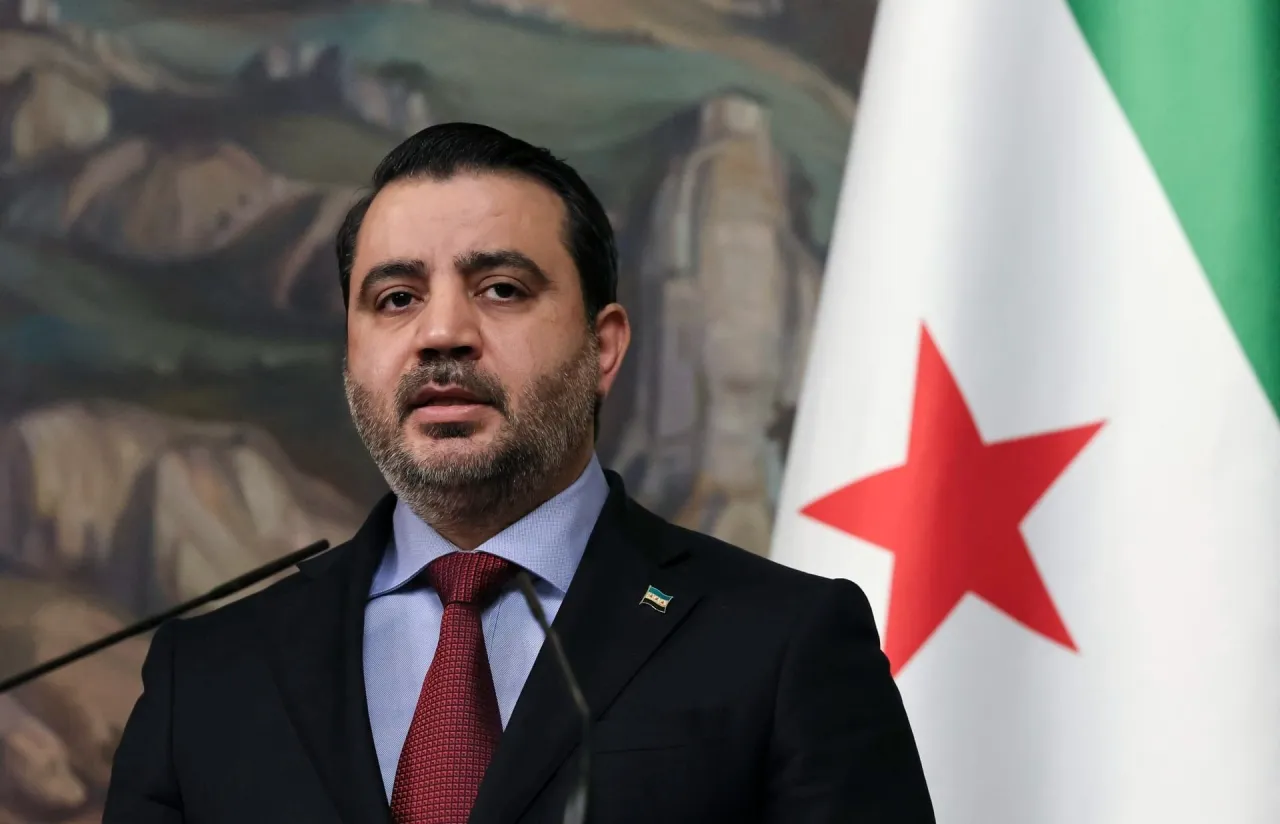
Khaberni - Syrian Foreign Minister Asaad Al-Sheibani said on Sunday that Israeli attacks on Syrian territory "make any path to normalization difficult," amidst ongoing talks in recent weeks to reach a security agreement between Damascus and Tel Aviv.
Al-Sheibani told the American CNN network that "Israel counters our peace efforts with raids and threats."
Since the fall of Bashar al-Assad's regime on December 8, 2024, Israel has violated Syrian sovereignty by bombing and expanding its occupation of lands in the south, even though the Syrian administration has not shown any aggressive intent towards Tel Aviv and has declared this on several occasions.
The Syrian Foreign Minister pointed out that "Israel obstructs the building of the Syrian state and fuels sectarian violence," asserting that "Syria does not represent a threat to anyone in the region, including Israel."
Al-Sheibani said that "Israel supported outlaws" in Syria, and "this prevented us from resolving the issue between the Bedouins and the Druze" referring to the clashes that occurred months ago in the Sweida province, which saw Tel Aviv intervene in support of the Druze.
He added that what Israel did "only complicated matters further, placing the Druze in a very difficult and embarrassing situation," noting that Israel "hindered our efforts when we faced a rise in sectarian violence in the south of the country."
In July last year, Sweida in southern Syria witnessed week-long armed clashes between Druze groups, Bedouin tribes, and government forces, resulting in hundreds of deaths, followed by a ceasefire that took effect on the 19th of the same month.
The Syrian government is making intensive efforts to maintain security in the country, since the overthrow of Bashar al-Assad's regime, after 24 years in power.
Al-Sheibani said that the Israeli strikes on Syria after the fall of Assad's regime "were shocking to us," confirming that "a strong and united Syria would be beneficial for regional security and this would benefit Israel."
The Syrian Foreign Minister praised "Washington's stance towards Damascus since the day of liberation," considering it "extremely positive and has received widespread approval from the Syrians."
Last Wednesday, President Ahmad Al-Shar' said before the United Nations General Assembly that his country has transformed from a state that exports crises to a historic opportunity for establishing stability, peace, and prosperity in the entire region.
Since 1967, Israel has occupied most of the area of the Syrian Golan Heights, and exploited the new situation after the fall of Assad's regime by occupying the Syrian buffer zone, declaring the collapse of the disengagement agreement between the two sides in 1974.
Reuters reported two days ago, citing 4 unnamed sources, that efforts to reach a security agreement between Syria and Israel stalled at the last moment, due to Israel's demand to allow it to open a "humanitarian corridor" to the Sweida province in southern Syria, which Damascus rejected as it considers it a violation of its sovereignty.