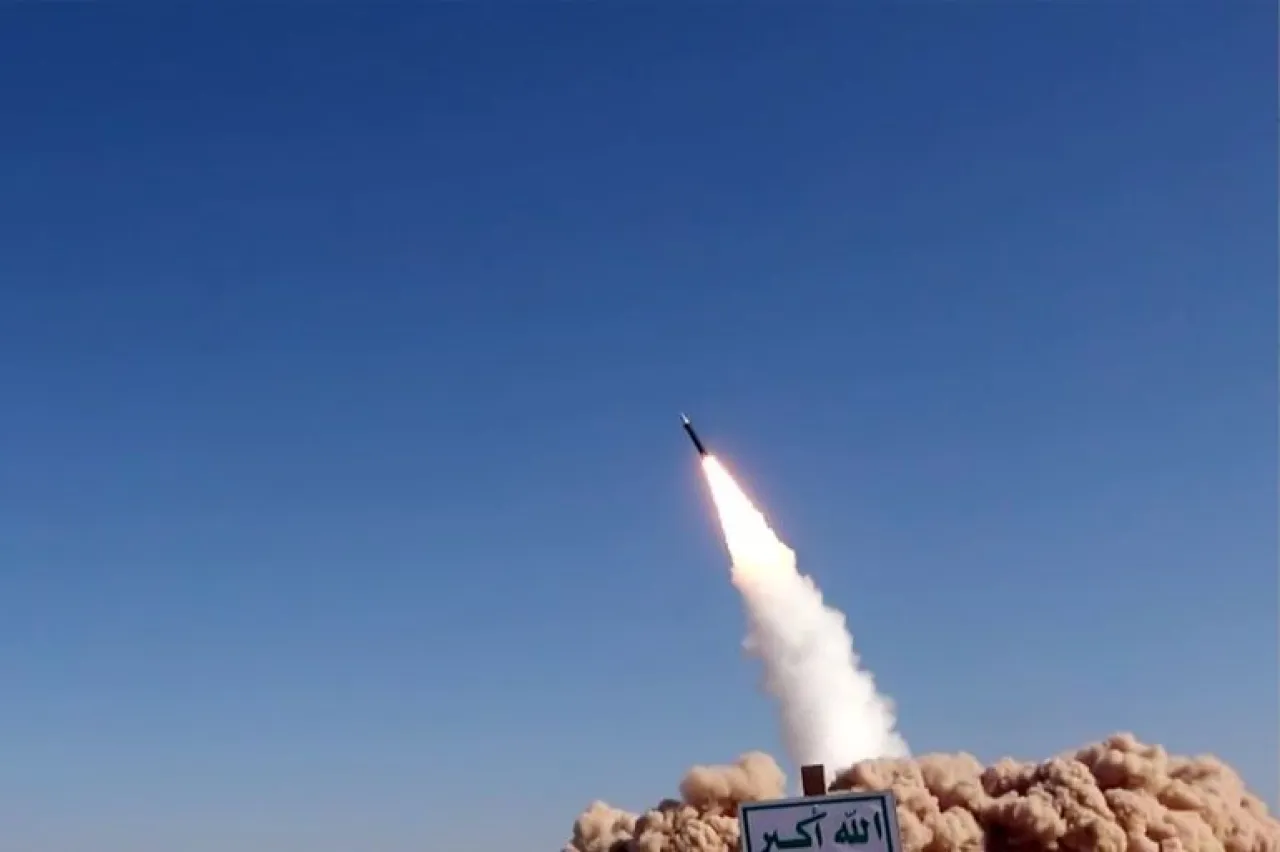
Khaberni -The Israeli occupation army announced that it intercepted a missile launched from Yemen on Tuesday morning, the day after it carried out airstrikes on the Hodeidah port controlled by the Iran-backed Houthis.
The army stated in a post on its Telegram account that “following the sounding of alarms in several areas in Israel, a missile launched from Yemen was intercepted”.
The missile launch at Israel came the day after Israel carried out intense airstrikes on the Hodeidah port controlled by the Houthis, in the second attack of its kind within a month.
Following the strike on this port located in western Yemen on the Red Sea, Israeli Minister of War Israel Katz stated that he “bombed targets belonging to the Houthi regime in the port of Hodeidah”, indicating that he “will forcefully prevent any attempt to rehabilitate the infrastructure that was targeted previously”.
He added, "As I have clearly said before, Yemen will meet Tehran's fate. The Houthis will pay a heavy price for launching missiles towards Israel."
Meanwhile, a Houthi security official confirmed to AFP that the Israeli strikes on the port of Hodeidah led to the destruction of a pier that had been rebuilt after being damaged in previous bombings.
The Houthis have recently resumed their attacks in the Red Sea, targeting commercial ships they accuse of being linked to Israel.
The Houthis have also resumed their attacks against Israel and against ships in the Red Sea, a move they say is in support of the Palestinians in the Gaza Strip. Israel responds to these attacks by launching strikes on their locations.
Fears of escalation after Israel bombed the Hodeida port controlled by the Houthis
On Monday, Israel carried out intense airstrikes on the Hodeidah port controlled by the Houthis, in the second attack of this type within a month, and warned that Yemen would “meet Tehran's fate”, raising fears of further escalation, before the Houthis announced striking Israeli targets.
Two weeks ago, Israel launched several airstrikes on Houthi-controlled areas in Yemen, including Hodeidah, in response to repeated attacks they carried out with rockets and drones since the Gaza war began in October 2023.
Israeli Minister of War Israel Katz stated in a statement, "The Israeli Defense Forces have just bombarded targets belonging to the Houthi regime in the port of Hodeidah, and will forcefully prevent any attempt to rehabilitate the infrastructure that was targeted previously."
He added, "As I have clearly said before, Yemen will meet Tehran's fate. The Houthis will pay a heavy price for launching missiles towards Israel."
These attacks are part of a bombing campaign that Israel started about a year ago, in response to rebel attacks, but its threats raise fears of a wider military escalation in the impoverished country.
Hours after the Israeli attack on Monday, the Houthis announced the execution of a military operation “with five drones”. The military spokesman Yahya Saree stated in a recorded statement on Telegram that the operation “targeted the Lod Airport and another military target, in the Jaffa area, and Um al-Rashrash port and Ramon Airport, and a vital target in the Asdod area in occupied Palestine”.
A Gulf official reported “serious concerns in Riyadh” that the Israeli strikes could turn into a large and prolonged campaign to eliminate Houthi leaders.
Yemen has been experiencing a bloody conflict since 2014 between the internationally recognized government, supported by a military coalition, and the Iran-backed Houthis who have captured vast areas of the country including the capital Sanaa.
The Gulf official, who preferred not to be named, added that any Israeli escalation “will push the region into uncontrollable chaos with unpredictable outcomes”.
Stéphane Dujarric, the spokesman for the Secretary-General of the United Nations, stated that António Guterres is deeply concerned about the renewed strikes on the port of Hodeidah and the risk of further escalation in the region, calling on all parties to exercise maximum restraint.
On Monday, a Houthi security official confirmed to AFP that Israeli strikes on the Hodeidah port had destroyed a pier that had been rebuilt after being damaged in a previous bombing.
The British maritime security company “Ambrey” stated that at least four commercial ships were anchored in the port, but no damages had been reported so far.
Heavy machinery
On July 7, Israeli airstrikes targeted the coastal governorate of Hodeidah, including the targets “Galaxy Leader” ship, which was seized by the Houthis in November 2023 and the Israelis claim it was equipped with a radar system to track shipping in the Red Sea.
An employee at Hodeidah port told AFP on Monday that “the bombing targeted heavy machinery brought in for construction work and restoration of what Israel had destroyed in the July 7 airstrikes. Israel also bombed the surroundings of the port and targeted fishing boats”.
The Israeli army noted that the targeted infrastructure included “construction equipment used to rebuild the port's facilities”, which had been targeted several times, and “fuel containers and ships used in military activities and hostile actions against the State of Israel”.
The statement added that the port was used to transport weapons from Iran, later used by Yemenis against Israel, and that Israel had observed efforts “to rebuild the port's infrastructure”.
On June 10, as well, the port of Hodeidah, along with the port of Salif on May 16, were targeted by Israeli airstrikes, killing one and injuring nine, according to the Houthi-controlled Health Ministry.
The Houthis have recently resumed their attacks in the Red Sea, targeting commercial ships they accuse of being linked to Israel.
Since the end of 2023, the Houthis have been launching attacks against Israel and against ships in the Red Sea, in a move they say supports the Palestinians in the Gaza Strip. Israel responds to these attacks by launching strikes on their controlled locations in Yemen.