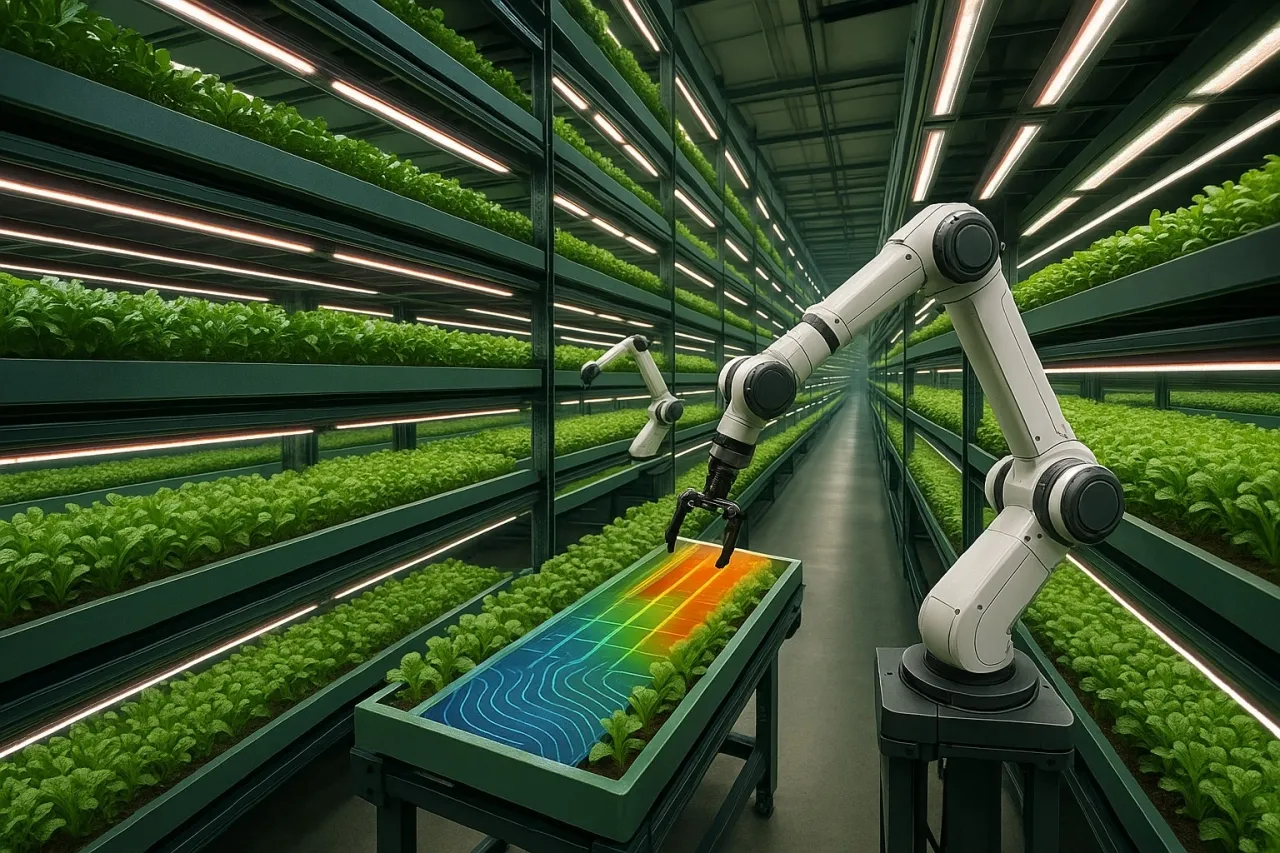
Khaberni -Vertical farms are experiencing a technological evolution that is reshaping the concept of agricultural production. The precision in control and monitoring is similar to advanced systems used on platforms like Download 1xbet Lebanon — where real-time data and immediate analysis determine success. Research indicates that full automation increases productivity by 247% compared to traditional farming, while reducing water consumption by 95%.
Advanced robotic technologies are transforming indoor farms into precise production factories. The American company “Iron Ox” operates a vertical farm covering 8,000 square meters producing 26,000 heads of lettuce daily by just 6 robots. This achievement demonstrates the immense potential of automation in achieving high production with maximum efficiency.
Advanced Robotic Systems in Agriculture
Developments in agricultural robots provide integrated solutions for indoor production. Robots in Vertical Farming use a robotic arm with millimeter precision to plant 3,600 seedlings per hour. “Plenty” farm in San Francisco produces 350 times the traditional crop yield in the same space.
The core components of agricultural automation include:
Programmed planting robots that place seeds at precise predetermined distances
Automated harvesting systems equipped with optical sensors to determine optimal ripeness
A mobile robotic arm for irrigation and fertilization with calculated doses for each plant
Monitoring robots equipped with high-resolution cameras to monitor plant health
Smart climate control systems to adjust temperature, humidity, and lighting
The Australian "Farm Bot" system manages a whole farm through a single mobile app. The robot plants, irrigates, and harvests 40 types of crops automatically, producing 2.4 tons of vegetables annually in just 50 square meters.
Artificial Intelligence and Productivity Enhancement
Artificial intelligence manages agricultural operations more efficiently than human expertise. Artificial Intelligence Systems in vertical farms analyze 847 variables in real-time to determine optimal conditions for each plant. “Johnson China” farm achieves faster growth by 35% through customizing LED lighting for each plant’s needs.
Machine learning algorithms predict harvest times with 98.7% accuracy. The system analyzes plant growth daily and automatically adjusts growing conditions. A farm in Singapore increased its productivity by 156% through improving lighting and nourishment cycles.
Computer vision systems detect diseases and pests before they become visible. High-resolution cameras monitor 15,000 plants daily, detecting subtle changes in leaf color or texture. This early detection prevents disease spread and maintains crop quality.
Precise environmental control maintains ideal conditions 24/7. Sensors monitor levels of carbon dioxide, humidity, and temperature every 30 seconds. The system instantly adjusts conditions to ensure optimal growth.
Sustainability and Economic Efficiency
Automated vertical farms achieve remarkable environmental and economic sustainability. Water consumption is reduced by 95% compared to traditional farming, while productivity increases 365 times in the same space. “Bowery” farm in New York produces 350 tons of vegetables annually in a single building, saving 15 million liters of water.
Automation reduces labor costs by 85%. A farm that traditionally needs 200 workers operates with just 12 maintenance technicians. This saving makes indoor agricultural products economically competitive with traditional farming.
Year-round local production reduces transport and storage costs. Fresh vegetables reach the consumer within 6 hours of harvesting, preserving their nutritional value and flavor. Restaurants in Tokyo buy vegetables from in-city vertical farms at prices lower than imported ones.
Energy efficiency improved by 40% with smart LED lighting. Systems adjust the intensity and color of the light based on the plant growth stage, saving 60% of electricity consumption. Solar panels cover 30% of energy needs in modern farms.
Guaranteed quality enables products to achieve higher prices by 20-40%. The absence of pesticides and protected production ensures pollutant-free vegetables. Organic quality certifications increase the value of products in specialized markets.
Recycling technologies convert agricultural waste into natural fertilizer. Organic materials decompose in closed systems, producing high-quality compost for subsequent cycles. This circular approach reduces waste by 90%.
The future of vertical farms is moving towards full automation and advanced artificial intelligence. The next generations of robots will manage farms the size of factories, producing high-quality food at low costs, contributing to solving global food security issues.