Khaberni -Iran holds new talks on its nuclear program with Germany, France, and Britain on Friday in Istanbul, the first since the United States attacked Iranian nuclear facilities in June amid the war between Israel and Tehran.
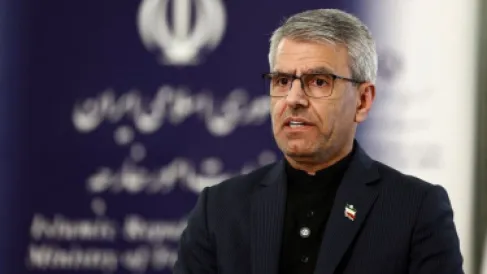
The spokesman for the Iranian Foreign Ministry, Ismail Baqaei, announced that "in response to the request of the European countries, Iran agreed to hold a new round of talks with representatives of the three European countries members of the Joint Comprehensive Plan of Action," as reported by the official television referring to that the meeting will be held in Istanbul.
A German diplomatic source earlier reported that Berlin, Paris, and London "continue to work intensively within the group of the three European countries to find a sustainable and verifiable diplomatic solution to the Iranian nuclear program," intending to hold a meeting later this week.
On Sunday, Iranian Foreign Minister Abbas Araghchi wrote on X, "Iran has shown that it can handle any 'dirty actions' and delusions, but it is always ready to reciprocate serious diplomacy in good faith."
The Western countries and Israel suspect that Tehran is aiming to acquire an atomic bomb, which it denies, affirming its right to continue its nuclear program for civilian purposes.
On June 13, Israel launched a surprise attack on its regional archenemy, targeting particularly military and nuclear facilities.
Then on June 22, the United States conducted strikes on the uranium enrichment facility in Fordo, south of Tehran, and two nuclear sites in Isfahan and Natanz.
Iran and the United States held five rounds of nuclear negotiations mediated by Oman before Israel waged its 12-day war against Iran.
But President Donald Trump's decision to join Israel in bombing three Iranian nuclear facilities ended the talks.
The three European countries last met with Iran in Geneva on June 21, just one day before the American strikes.
Meeting with Putin
In the meantime, Russian President Vladimir Putin held a meeting in the Kremlin on Sunday with Ali Larijani, one of the top advisors to the Supreme Leader of the Islamic Republic, Ayatollah Ali Khamenei.
The Kremlin spokesman Dmitry Peskov said that Larijani "conveyed assessments of the escalating situation in the Middle East and regarding the Iranian nuclear program."
He added that Putin expressed "Russia's known positions on the ways through which stability can be achieved in the region and the political settlement of the Iranian nuclear program."
Moscow maintains friendly relations with the Iranian leadership and provides significant support to Tehran, but it did not strongly back its partner during the war with Israel even after the United States joined the bombing campaign.
Last week, Moscow denounced a report by the Axios American website claiming that Putin urged Iran to accept a deal with Washington preventing it from enriching uranium.
Trigger Mechanism
In 2015, Iran and major powers signed a nuclear deal called "Joint Comprehensive Plan of Action", which imposed restrictions on Iran's nuclear program in exchange for the easing of sanctions on it.
But the effects of the agreement became effectively null from 2018, during Trump's first term, when the United States withdrew from it and reimposed sanctions on Iran.
In response, about a year later, Tehran gradually began to deviate from most of its commitments under it.
Europeans warned that if Iran does not return to the talks soon, they will activate the "trigger mechanism" (snapback) included in the nuclear agreement, which allows for the reimposition of United Nations Security Council sanctions on Tehran in case of non-compliance with the terms of the agreement. The deadline to activate the mechanism ends in October.
After a phone call with his European counterparts on Friday, Araghchi said there was no "moral or legal basis" for reactivating the sanctions.
On Sunday, Araghchi wrote on X, "Through its actions and statements, including providing political and material support for the unjustified and illegal military aggression by the Israeli regime and the United States... the three European countries have abandoned their role as 'participants' in the nuclear agreement."