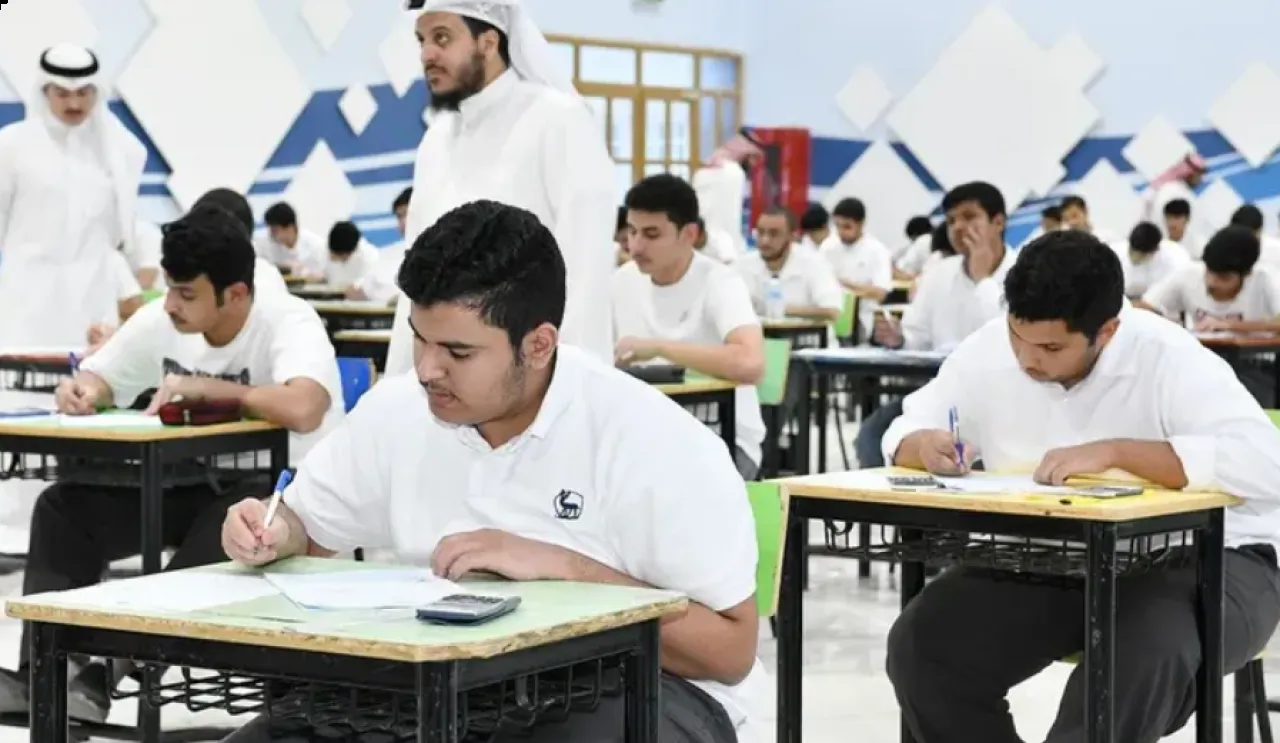
Khaberni -The Misdemeanor Court of Cassation in Kuwait sentenced the head of the secret printing department at the Ministry of Education to 3 years in prison with labor and enforcement, and imprisoned a teacher and an employee for 6 months due to their involvement in the same act, acknowledging their commitment to good conduct and behavior for two years, in the case of leaking high school exams.
The Public Prosecution charged the first defendant, as a public employee and head of the main secret printing department at the Ministry of Education, with disclosing confidential information related to the Ministry of Education concerning exams for the second term of the twelfth grade in both the scientific and literary sections, which were supposed to be secret according to instructions derived from anti-cheating regulations and ministerial decisions related to violating students.
The Cabinet drafted a new amendment to the penal law, last June, to criminalize any action involving printing, publishing, promoting, or leaking questions or answers of middle and high school exams with the intent of disrupting the testing system.
Returning to the facts of the case, the accused head of the secret printing office photographed test models from the damaged templates at the printing press incinerator, providing them to the second and third defendants to further their own interests, which harmed the interests of the Ministry of Education and other students by failing to ensure fairness among them, according to investigation results.
The issue of cheating and leaking exam questions has resurfaced in Kuwait, as the Court of Appeals last month sentenced two siblings from the "Bidoun" category, in addition to a citizen and a female citizen, to 5 years in prison, and fined them 42,000 Kuwaiti dinars ($137,000), with the imprisonment of a fifth defendant, a female teacher, suspended in a case of leaking the 2024 high school exams.
Kuwait reaffirms that it punishes those who commit these acts with imprisonment for no less than two years and no more than 5 years, and a fine ranging between one thousand and five thousand dinars, or one of these two punishments. It also decides to criminalize the conduct of altering students' answers or awarded grades in educational tests without justification, punishing the perpetrator with imprisonment for no more than 7 years, and a fine ranging between five thousand and ten thousand dinars, or one of these two punishments.