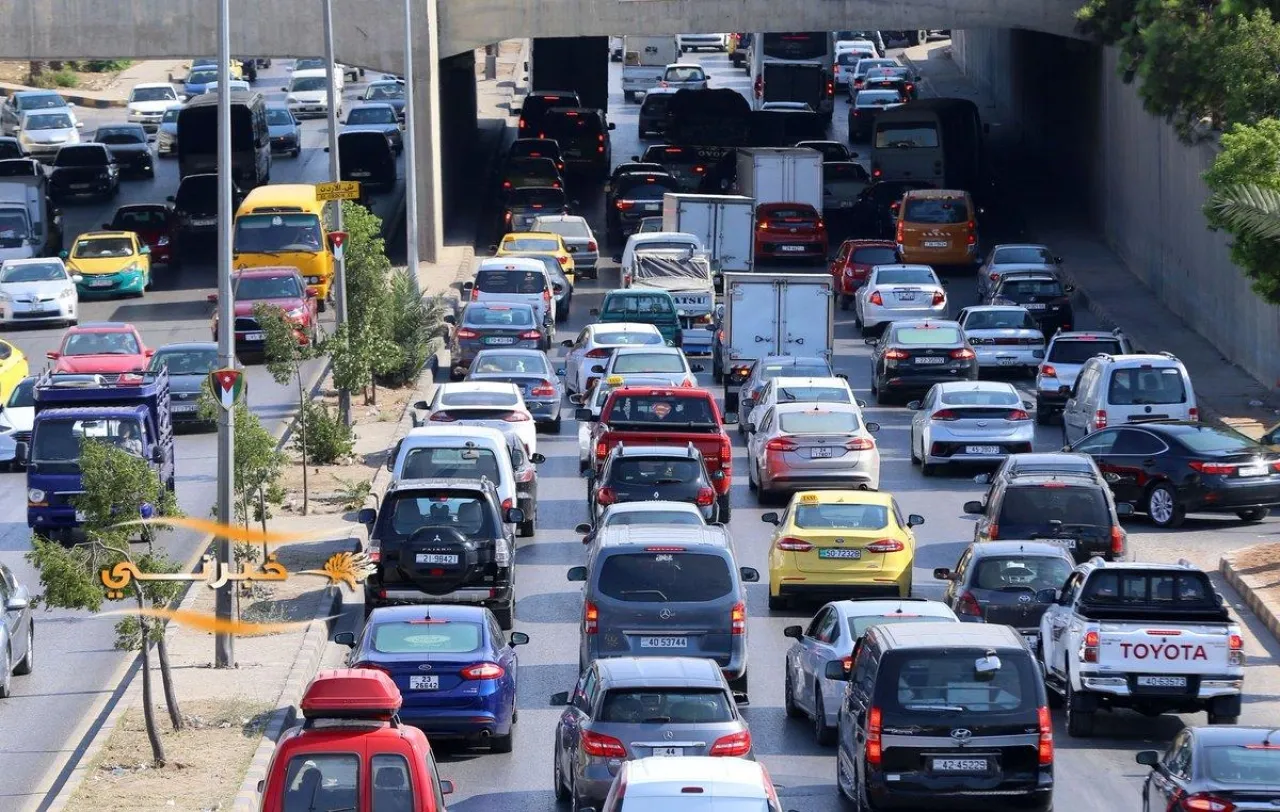
Khaberni -The Secretary-General of the Higher Population Council, Dr. Issa Al-Masarweh, identified 5 demographic reasons that have led to the traffic crises we experience today.
Al-Masarweh stated that among the council's tasks is monitoring and analyzing data related to demographic elements in our country and explaining the consequences of this situation on all sectors and national needs, including undoubtedly the traffic situation on our roads and the challenges associated with this situation.
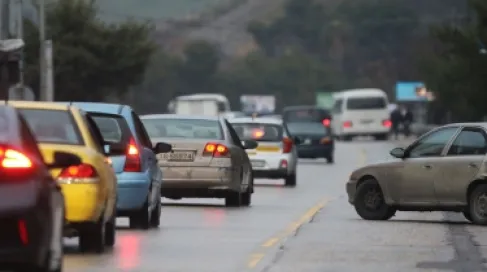
He added that traffic crises in our cities are the daily talk of the people and a constant source of their frustration. Road and traffic engineers in our country have not overlooked our traffic situation. Instead, they have given it its due in terms of study, interpretation, and analysis of the engineering and organizational causes responsible for it, presenting solutions to it.
He explained that the General Secretariat of the Higher Population Council operates with the awareness that demographic variables and trends must guide and direct decision-makers because they are comprehensive matters that affect all aspects of our national and private situation, as population numbers are not just figures but needs.
He pointed out that the Traffic Management handles the traffic situation with all professionalism and efficiency, but it has no hand in what this situation has become, clarifying that the demographic reasons for traffic congestions are:
1- Unbalanced population distribution - about one million people only live in the southern half of our country (8.1% of the population), despite this half containing most of Jordan’s natural and economic resources. Meanwhile, 11 million of the population live in the northern half of the kingdom (91.9% of the population).
2- Youthfulness of the population – 44% of our country's population are under the age of 20 (5.2 million children and young people), which definitely means that one million new drivers will join the existing number of drivers in less than ten years, thus there will be a rapid increase in the number of vehicles, most of which will be in the northwest provinces of the kingdom.
3- Increasing number and proportion of young male and female drivers – and this age group uses the car more than others for necessary, and also unnecessary reasons.
4- Rapid population growth in Jordan – the population of our country has doubled in less than twenty years, with six million people added during these twenty years, bringing the population close to 12 million, at least half of them arrived over the past twenty years.
5- Another factor exacerbating the impact of the aforementioned demographic reasons is the continuous actions by the relevant authorities in local administrations in: (a) granting permits for urbanization on lands in northwest Jordan, resulting in an urban flood over our cultivated and agricultural lands and beautiful landscapes, thereby undermining our rural family and women's economy and our natural plant coverage and food security, and causing this to transform productive lands into commodities topping all forms of commercial ads, which led to unprecedented escalation of traffic congestions especially in the three main cities. (b) Changing the use of many streets and existing residential neighborhoods to stores instead of being for vehicles and residents, without real participation in these conversion decisions by the residents of these streets and neighborhoods.
And then, what is the effective long-term solution:
1- It seems inevitable to establish a new major city in a distant area in south Amman and another distant in east Irbid city, with sewage services that are lacking in most of the newly inundated urban areas, as protecting the environment from the consequences of the absence of a network for draining wastewater from homes is essential, due to its connection with the quality of groundwater and public health of the population.
2- There is also an urgent need for a land use law to replace the current law on the organization of cities and towns, which has also contributed to the traffic crisis instead of facilitating it.
3- It is also worth mentioning here that the Economic Modernization Vision 2023-2033 included specific and explicit initiatives to solve the traffic dilemma and protect the rural economy and environment, clearly stating the following to be implemented by 2025: "Enhancing the use of urban planning tools and completing the update of the 2007 Land Use Map, and amending the Land Use Regulation and its amendments number (6) for the year 2007, and reviewing and amending the Law of the Organization of Cities and Villages and the regulations derived from it in order to apply future city standards."