Khaberni -The official Syrian news agency published a report on the Jordanian-Syrian relations as follows:
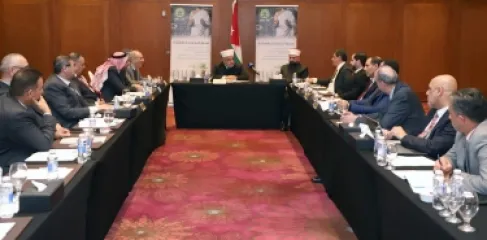
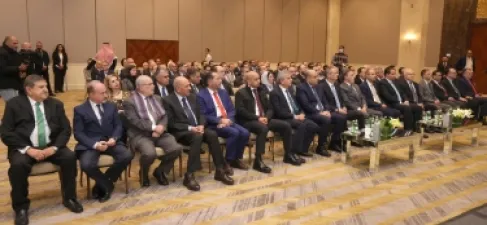
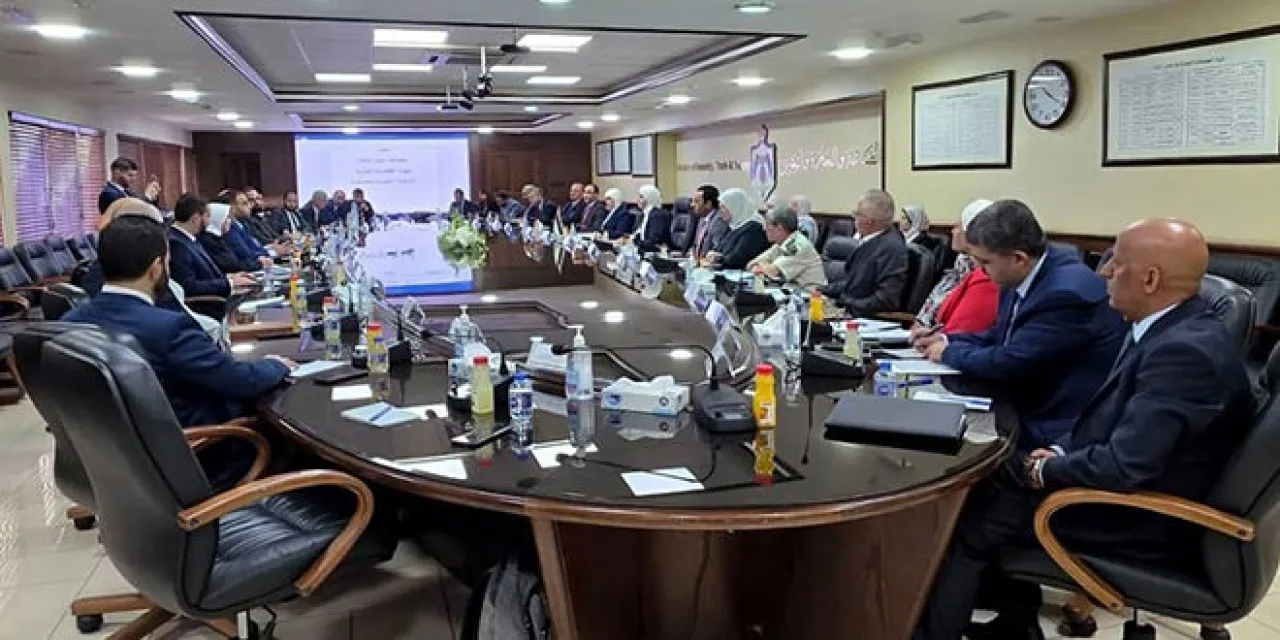
In the framework of mutual interest to enhance the bonds of economic and commercial cooperation between Syria and Jordan, this year 2025 witnessed a series of meetings and official encounters between the relevant entities in both countries, culminated today by the convening of the "Syrian-Jordanian Joint Technical Committee on Economic and Trade Affairs" in Amman.
This increased momentum of bilateral cooperation comes in the context of a new phase that Syria is experiencing after the victory of the Syrian revolution and the fall of the old regime, which has contributed to advancing the economic relations towards better levels, with tangible reflections on the volume of trade exchange, simplifying the movement of transport and transit, and activating bilateral agreements.
The cooperation between Syria and Jordan accelerated significantly during the current year, with the economic aspect being one of the most prominent milestones, especially the agreements made in trade and transport movement, and steps to enhance economic relations to achieve shared development. Among the most important of these milestones were:
Amman meeting today July 14, 2025
Where today in the Jordanian capital, the "Syrian-Jordanian Joint Technical Committee on Economic and Commercial Affairs" commenced, chaired on the Syrian side by the Deputy Minister of Economy and Industry, Engineer Basel Abdel Hanan, and on the Jordanian side by the Secretary-General of the Ministry of Industry, Trade and Supply Dana Al-Zu'bi.
Both sides affirmed their countries' commitment to enhancing the bonds of economic and commercial cooperation, overcoming obstacles in the way of developing bilateral relations in a way that serves mutual interests, and emphasized the importance of expanding the horizons of partnership, positively reflecting on the sectors of industry, trade, and investment in both countries.
Enhancing the infrastructure for transport
The Syrian-Jordanian Technical Committee for Land Transport met on June 25 and 26, 2025, in Amman with the aim of strengthening the joint cooperation in the land transport sector, which contributes to facilitating the movement of trade and passengers, and removing any impediments facing this sector, and uniform transit fees were adopted at a rate of 2 percent in both countries, instead of 5 percent previously, in accordance with the principle of mutual treatment to enhance the movement of passengers and goods.
According to the statistics, the number of trucks that entered Syrian territory from Jordan from December 16, 2024, to July 2 of the current year was about 31,434 trucks, with the construction sector topping the list of sectors exporting to Syria with about 17,535 trucks loaded with various building materials and construction works, followed by the agricultural sector which exported 2,323 trucks, then the industrial sector with 2,289 trucks, and the food sector came in fourth with 1,265 trucks.
The number of trucks that entered from the Syrian side to Jordan for the same period was 77,632 trucks.
Activating border movement and logistics
To facilitate trade exchange between the two sides, the Jordanian Ministry of Interior decided to keep the "Nasib-Jaber" crossing open around the clock (24 hours), alongside technical joint steps.
The Jordanian Customs report indicated an increase in Jordanian exports to Syria by 60,366 million dinars, reaching 88,654 million dinars, since the beginning of the current year until mid-May of the past, in comparison to an import volume of 28,288 million dinars.
Memorandum of understanding and higher coordination council
On May 29, 2025, a memorandum of understanding was signed between the "Damascus Chamber of Commerce" and the "Jordan Chamber of Industry" aimed at expanding the frameworks of commercial and investment cooperation and organizing joint economic events.
In addition, the Higher Coordination Council on May 18, 2025, approved a general framework to enhance governmental cooperation through a council of ministers including the ministries of Commerce, Energy, Transport, Health, Agriculture, Water, and others from both sides, along with a work plan to draft a cooperative roadmap in the fields of investment, trade exchange, transport, industry, agriculture, the banking sector, and food industries, during which an agreement was made to form a business council and joint sectoral committees.
Additional areas of cooperation
The economic cooperation between Syria and Jordan also covered the areas of energy and water, where joint technical sessions were held at the beginning of July this year to discuss the water shares in the Yarmouk River and update the agreements related to water and energy within the joint technical committee.
The cooperation extended to local administration, as discussions were held on enhancing administrative cooperation and municipal services and exchanging expertise on July 4th, attended by the governors of Damascus and its rural area and the governor of Amman, with an emphasis on activating the role of the chambers of commerce in supporting agricultural and industrial exchange.