Khaberni -The Duqm-2 mission from the Duqm series for launching experimental spacecraft was concluded today in the Sultanate of Oman, without the launch of the "Kia-1" spacecraft.
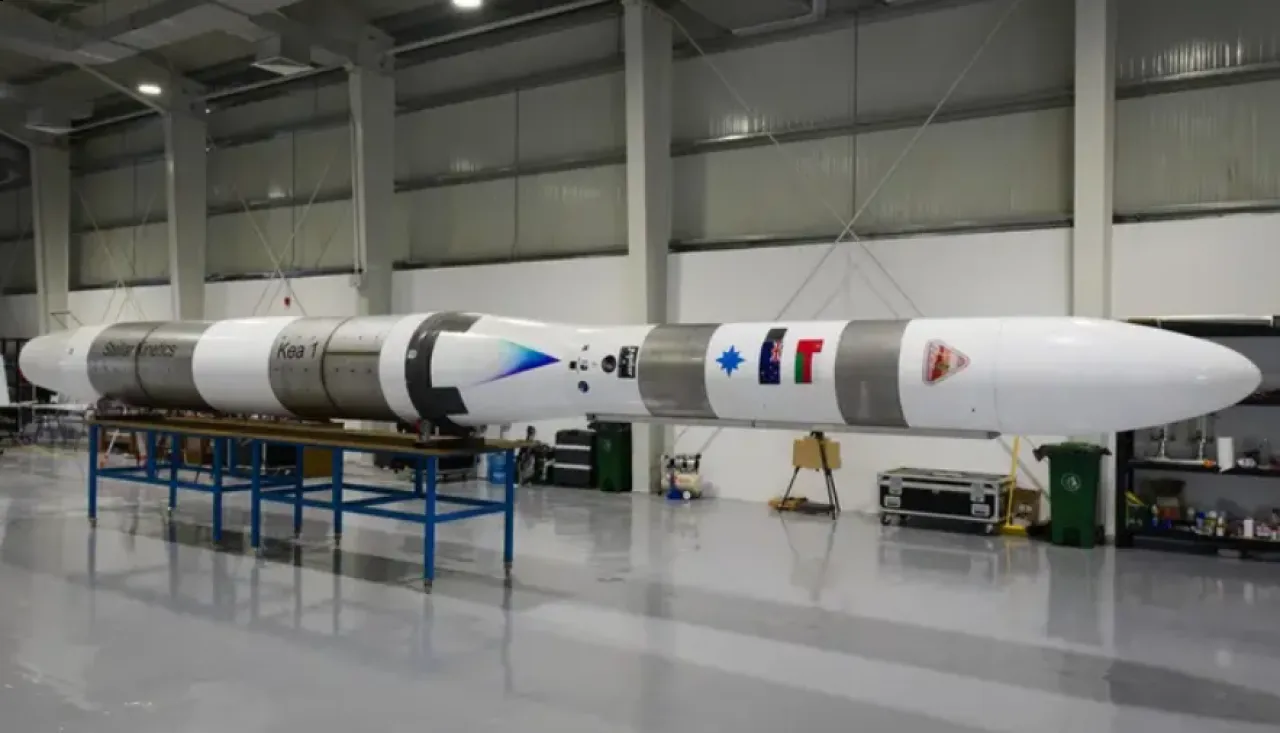
The Kia-1 spacecraft, belonging to "Stellar Kinetics" (a semi-orbital experimental vehicle), was scheduled to be launched from the "Launch" spaceport in the Central Governorate before the launch was halted during the final preparations due to a technical issue with the onboard actuators.
The companies "Launch" and "Stellar Kinetics," along with partners in the "Duqm-2" mission, collected a massive amount of precise data in the stages preceding the launch attempt, before safety protocols were activated to unload the propellant materials from the Kia-1 spacecraft and completely secure the site.
The "Launch" company succeeded in preparing and executing the spaceport activities, achieving a number of objectives and gaining crucial insights across technical, operational, and logistical aspects.
The Duqm-2 mission supported the enhancement of Omani skills in launch operations, including handling cryogenic fluids, establishing power systems, constructing infrastructure for launch platforms, and providing technical support services to the operational entities, representing a significant operational success for the "Launch" spaceport.
In the meantime, the CEO of the "Launch" spaceport, Azan bin Qais Al Said, stated that many objectives of the Duqm-2 mission were achieved, including mission planning, handling regulatory operations, designing ground infrastructure, and constructing a dedicated warehouse for the assembly and preparation of spacecraft, noting that the conclusion of the launch experiment reflects the precision and care required in space operations, and praising local and international partners for prioritizing safety.
He said: "Launch" spaceport continues to rapidly acquire knowledge to establish itself as a capable and reliable space launch platform, enhancing its role in building sustainable partnerships based on skills in the global launch ecosystem."
Azan bin Qais Al Said noted that the lessons learned from the "Duqm-2" mission would develop "Stellar Kinetics" and the "Launch" spaceport, as the semi-orbital experimental vehicle was designed to prove orbital-class systems such as stage separation and guidance and navigation systems, while operating in the Middle Eastern summer under unprecedented time schedules, showing that the vehicle underwent successful operations over two weeks, including payload integration, electronic systems testing, and fuel tank filling, as part of the advanced technical preparations for the launch attempt.