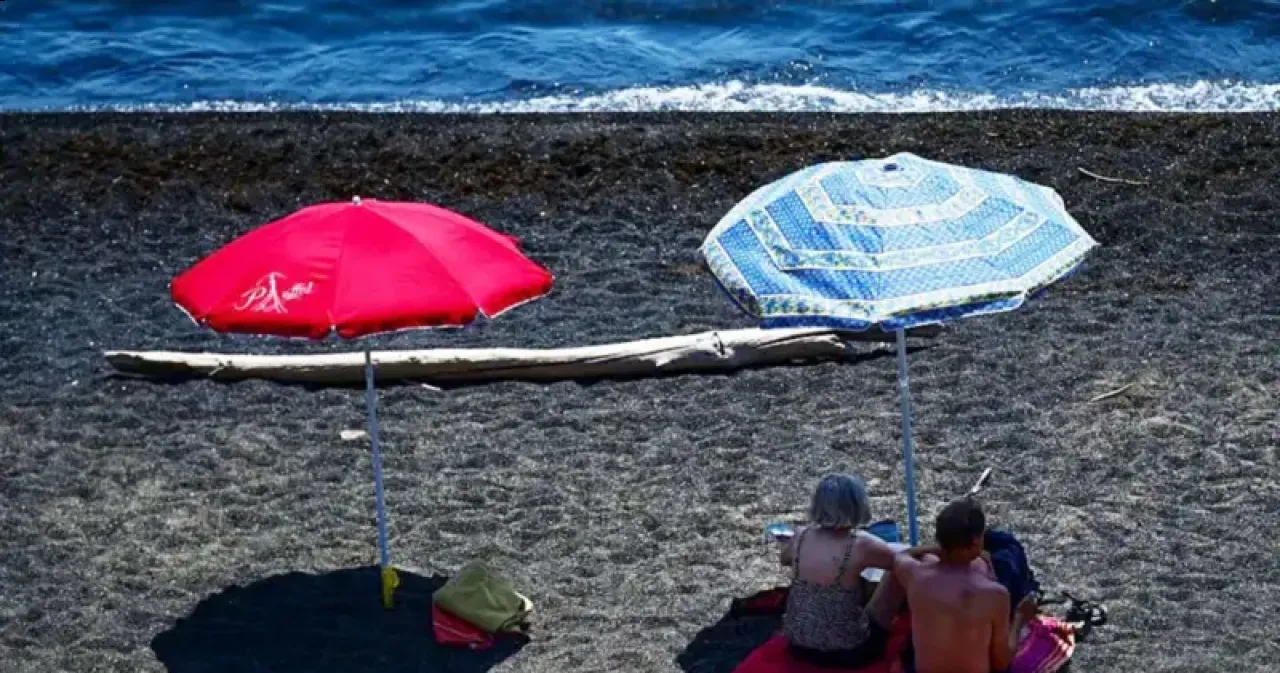
Khaberni -Although the warmth of coastal waters may seem tempting for a pleasant holiday, the heatwave in the Mediterranean has reached an intensity that has led scientists to warn of potential devastating effects on marine life in the countries bordering the Mediterranean Sea.
Sea surface temperatures regularly exceeded 30 degrees Celsius off the coasts of Majorca and other areas in late June and early July, in some cases by six or seven degrees above the usual averages, raising increasing concern about the escalation of unusual climatic phenomena in the region.
The water temperatures there are likely exceeding those of swimming pools at local recreation centers.
The western part of the Mediterranean experienced the most intense marine heatwave at this time of year, extending its effects over wide areas of the sea and lasting for consecutive weeks, highlighting the escalation of climate pattern disturbances in the region.
However, it seems that the pace of the heat is gradually decreasing, but some marine organisms are having difficulty adapting to this extended and intense warmth, which could have potential implications for the abundance of fish stocks and the stability of marine ecosystems.
To provide a clearer picture, swimming pools at recreation centers are usually heated to reach a temperature of 28 degrees Celsius while competitive swimming pools are slightly cooler, with temperatures ranging between 25 to 28 degrees Celsius, according to the World Aquatics Sports Organization.
The Swimming Teachers' Association recommends that the temperature of children's swimming pools should be somewhat higher, preferably between 29 to 31 degrees Celsius, while it is advised to reach between 30 to 32 degrees Celsius for infants.
Moderate temperatures might conceal unseen threats, as harmful bacteria and algae find warm seawater an ideal environment for rapid spread unlike the situation with chemically treated swimming pools.
Sea temperatures reaching 30 degrees Celsius or more during late summer are no longer an unusual occurrence in the Mediterranean.
However, they are relatively unusual in June, according to data from the European Climate Service "Copernicus," the organization "Mercator Ocean International," and readings conducted in Spanish ports.
It is noteworthy that this year, sea temperatures, which reached 30 degrees Celsius, came earlier than usual, indicating that the summer will be harsher and may last longer, according to Marta Marcos, an associate professor at the University of the Balearic Islands in Spain.
Aida Alvera Azkarate, a researcher in ocean sciences at the University of Liege in Belgium, said: "I grew up here so we are used to heatwaves, but they have become more frequent and intense over time."
She added: "We were all surprised by an unprecedented degree of severity of this heatwave."
She continued: "It is extremely worrying, and is expected to recur in the future."
Marine heatwaves have become more severe and persistent with increasing greenhouse gas emissions from human activities, primarily the combustion of coal, oil, and gas.
It is noted that the number of days with high sea surface temperatures globally has tripled over the past eighty years, according to a study published earlier this year.
Global warming is likely the main factor behind marine heatwaves... it is fundamentally a process of transferring heat from the atmosphere to the ocean, straightforward and simple, as Marcos explained.
The Mediterranean is particularly susceptible to these phenomena due to its geographic nature resembling a bathtub, as it is surrounded by continents on most sides, limiting its openness to the oceans and contributing to the retention of heat within it.
It means that waters do not easily flush from this sea, leading to a rapid increase in surface temperatures when warm air, sunny skies, and light winds are available, as happened in June.
Therefore, the Mediterranean is considered a "hotspot for the phenomenon of climate change," according to Karina von Schuckmann from the non-profit research organization Mercator Ocean International.
The heatwave peaked at the end of last June and the beginning of this July, then stronger winds subsequently helped to move the deeper and colder waters to merge with the hot surface layers, leading to a reduction in temperatures.
Temperatures are still above usual levels, and this may have effects on marine life that have not yet appeared.
There are limits to the temperatures that most living organisms can endure and survive, and these limits vary significantly between species and even among individuals within the same species.
But marine organisms may also suffer from stress due to prolonged exposure to high heat, gradually depleting their energy throughout the summer until it reaches a stage where it is difficult to adapt and survive.
Emma Ciprian, a specialist in ecology at the Advanced Studies Center in Blanes, Spain, said: "I recall four years ago when we dived in September, at the end of summer, we found a massive number of skeletal remains of organisms."
Marine algae and seagrasses act like forests in the Mediterranean, harboring hundreds of species and contributing to the sequestration of carbon dioxide, which causes global warming.
Some of these species have a good capacity to adapt amid normal Mediterranean temperatures, but they often cannot withstand marine heatwaves that have become more severe and frequent, according to Ciprian.
Heat can also cause what is known in ecology as "sublethal effects," where species enter a survival-only mode of life without reproducing.
If we begin recording the environmental impacts that may result from rising water temperatures, it is very likely that there will be repercussions on human communities, including losses in the fishing sector, as warned by Dan Small, the lead researcher at the Marine Biological Association in Plymouth.
Small said: "We will have to wait and see, but what is really worrying is that the temperatures reached very high levels early in the summer."
The Mediterranean Sea, which is witnessing an accelerated rise in temperatures, is considered an "early warning bell regarding climate change and marine ecosystems," he remarked.
Excess heat in the ocean may also exacerbate extreme weather by providing additional energy that contributes to the escalation of its intensity and frequency.
Increased sea heat can lead to higher evaporation rates, which raises the humidity in the atmosphere and fuels the occurrence of heavy rainfall and more extreme weather phenomena.
In some cases, other factors may lead to devastating floods as occurred in Libya in 2023 and the city of Valencia in 2024.
Warmer waters may also weaken the effect of the sea breeze that usually moderates air temperatures in coastal areas, increasing the sensation of heat for the residents.
Marcos warned that another heatwave this summer would cause much concern, adding: "I am almost certain that it will be horrific."