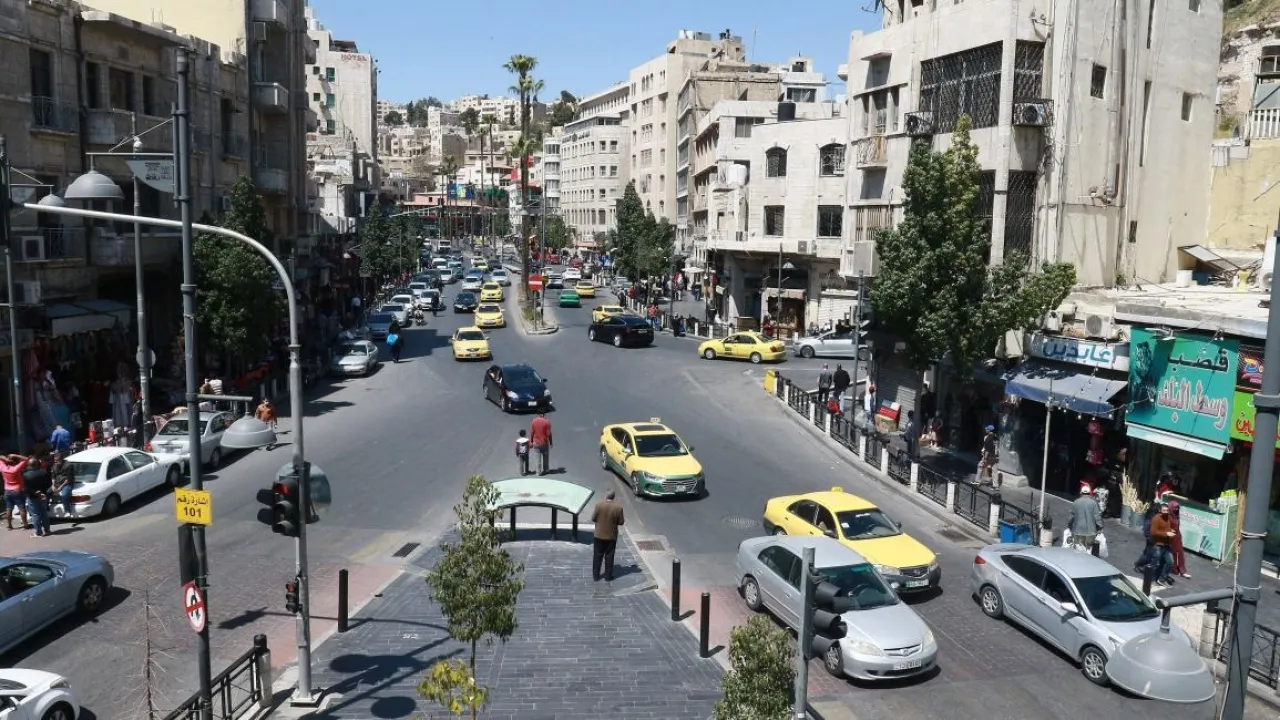
Khaberni - Experts and specialists in the real estate sector have warned of the risks of declining Arab and foreign interest in owning real estate in Jordan after they have long been a pillar of the market and a stimulant for real estate transactions and the rising demand for land, buildings, residential apartments, and others. They emphasized the importance of reevaluating the overall economic and investment policies related to the real estate sector in a way that stimulates it and increases its attractiveness for Jordanians and others from Arabs and foreigners, especially during the upcoming period, which is expected to witness significant economic transformations and an increase in competition pace, especially with the lifting of sanctions on Syria, according to what was published by Al-Arabi Al-Jadeed newspaper.
Experts expect that the interest of foreigners in owning real estate in Jordan will decline as eyes turn towards Syria and what it may offer in terms of attractive features for various investments, especially in real estate, facilities and lower prices compared to other countries in the region.
Investor in the housing sector Kamal Al-Awamleh told "Al-Arabi Al-Jadeed," that the economic interest requires providing more advantages and incentives for the real estate sector, which is one of the most important sources of the treasury and contributes significantly to the gross domestic product and is a center of attraction for Arab and foreign investors and those wishing to own real estate in Jordan.
He indicated that the sector will face intense competition during the upcoming period with the lifting of sanctions on Syria and changing investment directions in the region in general, and thus many Arabs and foreigners will turn to owning real estate in Syria, especially residential apartments and land for commercial purposes.
The head of the Jordanian Engineers Syndicate, Abdullah Ghosheh, said: The ownership of non-Jordanians of real estate decreased by 13%, which is an indicator that calls for reevaluating the policies attractive to foreign investment, especially in areas that are still outside the central focus.
In a recent analytical review about the real estate market, he indicated that statistics show that the volume of real estate trading in Jordan during the first third of 2025 amounted to nearly two billion Jordanian dinars, which reflects a noticeable increase compared to the same period of the previous year. He also pointed out that the average volume of annual real estate trading during the past three years ranges between six and seven billion dinars, which indicates the importance of this sector in the national economy (dinar = 1.41 dollar).
He said that the continued concentration of real estate activity in the capital Amman, accounting for more than 70% of the total real estate trading, reflects a clear imbalance in the developmental map, and indicates the absence of effective policies that enhance investment attractiveness in the provinces, especially those that have significant tourist, geographical, and developmental advantages, such as Ajloun, Jerash, Ma'an, Karak, and Wadi Musa.
He added that the excessive reliance on the capital burdens its infrastructure and raises real estate prices disproportionately, deepening the gap between the center and the peripheries, calling for a new developmental model that relies on incentivizing real estate investment in cities and regions with latent potential, through offering tax incentives, facilitating ownership procedures, and ensuring the provision of basic infrastructure.
He explained that investing in the provinces not only restores developmental balance but also represents a comprehensive economic opportunity, as any real estate activity stimulates local production chains starting from building materials, including crafts, service sectors, transport, and public utilities, leading to the creation of direct and indirect job opportunities.